
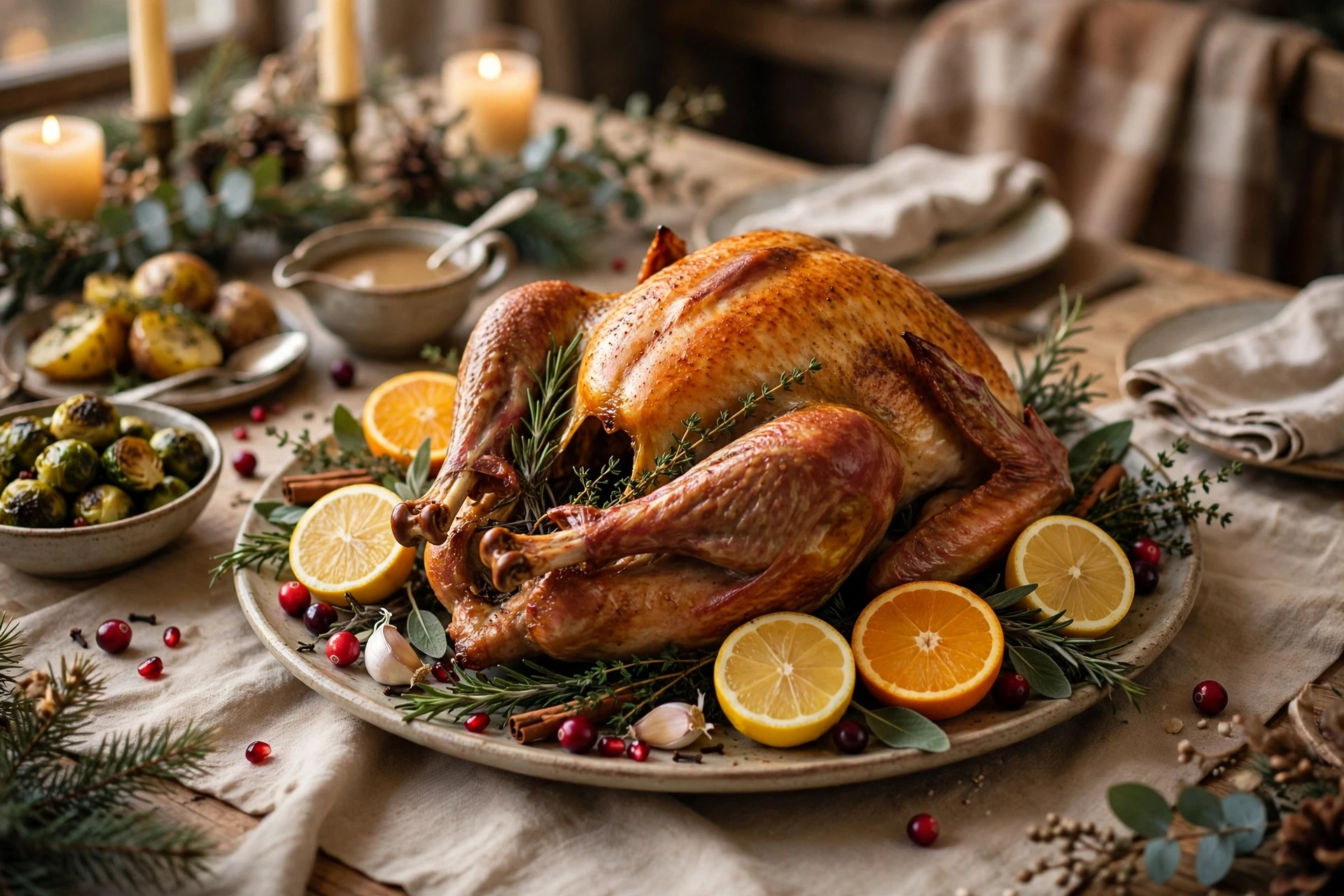
15 Thanksgiving Turkey Ideas — Roasted, Brined, Smoked and More Ways to Cook the Bird
The turkey is the one dish everyone remembers, which is exactly why choosing how to cook it can feel like the biggest decision of the holiday. These Thanksgiving turkey ideas cover the full range of approaches — a classic roast for traditionalists, brined birds for insurance against dry meat, a spatchcocked turkey for anyone short on time, and smaller options like a slow-cooker breast for gatherings that do not need a whole bird at all. Every method below includes the flavour you get, the effort it actually takes, and who it suits best.
You only need one. Read the planning section first, then pick the method that matches your equipment, your oven space, and how adventurous you feel this year.
Before You Choose: Bird Size, Thawing and Timing
A few widely used rules of thumb make the rest of the day much easier:
- How much turkey per person: Plan on about 1 pound (450g) of whole turkey per person for a comfortable serving, or 1½ pounds per person if you want generous portions and leftovers. For a boneless breast, about ½–¾ pound per person is plenty.
- Fridge thawing: Allow roughly 24 hours of fridge thawing for every 4–5 pounds of turkey. A 12–16 pound bird therefore needs 3–4 days in the refrigerator, on a tray to catch drips.
- Cold-water thawing (faster): Submerged in cold water, a turkey thaws at about 30 minutes per pound; change the water every 30 minutes and cook the bird immediately afterwards.
- Safe temperature: Whichever method you choose, the turkey is done when the thickest part of the thigh and the breast reach 165°F (74°C) on a meat thermometer — colour and clear juices are not reliable on their own.
- Resting: Rest every bird 20–40 minutes, tented with foil, before carving — the meat stays juicier and the oven is freed up for sides.
1. Classic Roast Turkey
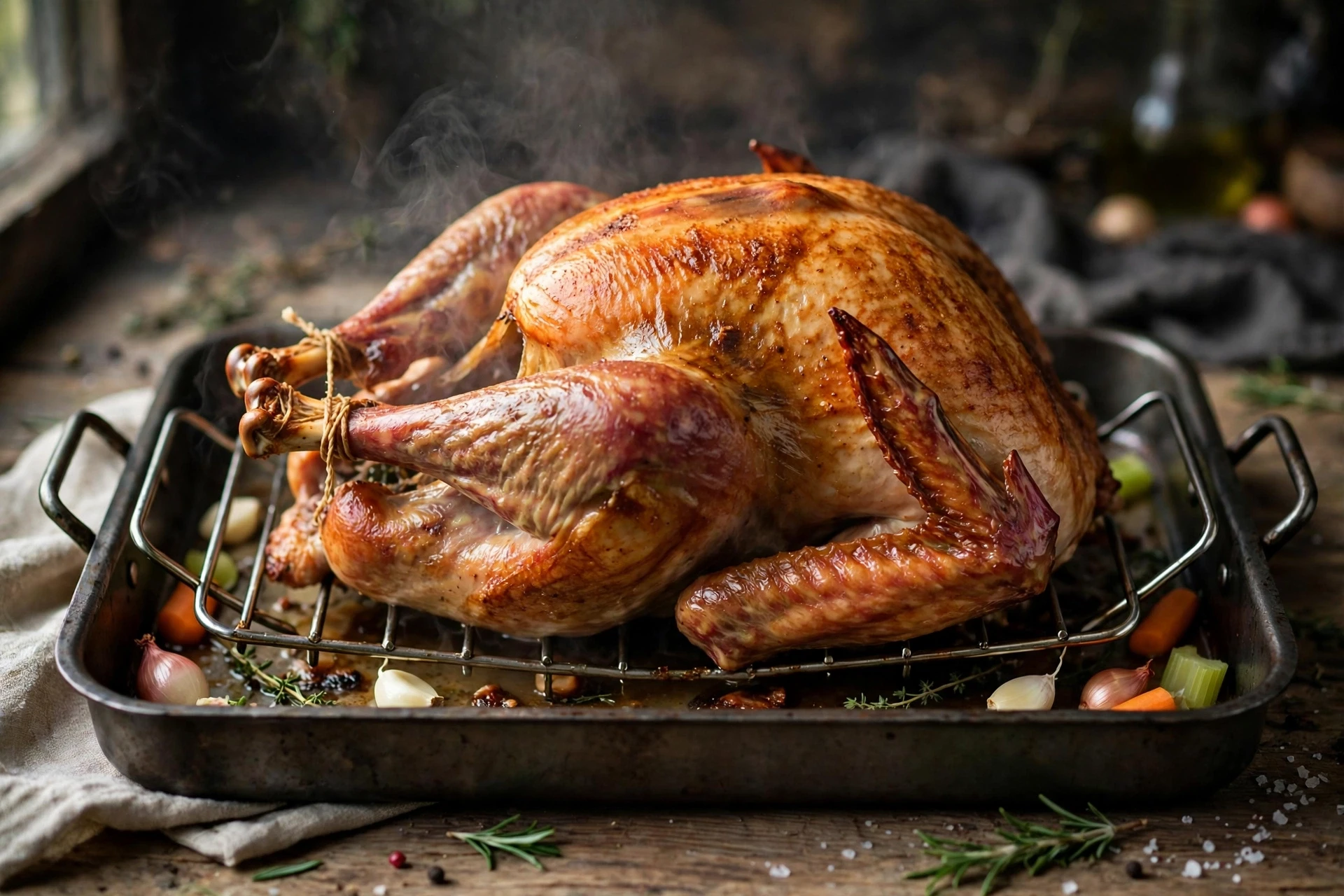
The reference point for every other method: a whole turkey, seasoned simply with salt, pepper, and butter, roasted on a rack until the skin is deep golden and crisp. The flavour is pure turkey — savoury, familiar, and exactly what most guests picture when they sit down.
Method in brief: Roast at 325°F (165°C) in a roasting pan, roughly 13–15 minutes per pound for an unstuffed bird, until the thigh reads 165°F (74°C). Best for: First-time hosts and traditional tables. Practical tip: Let the bird sit at room temperature for about an hour before roasting, and start checking the temperature a good 30 minutes before you expect it to finish — ovens vary, and an overcooked turkey dries out fast.
2. Dry-Brined Turkey Thanksgiving Turkey Ideas
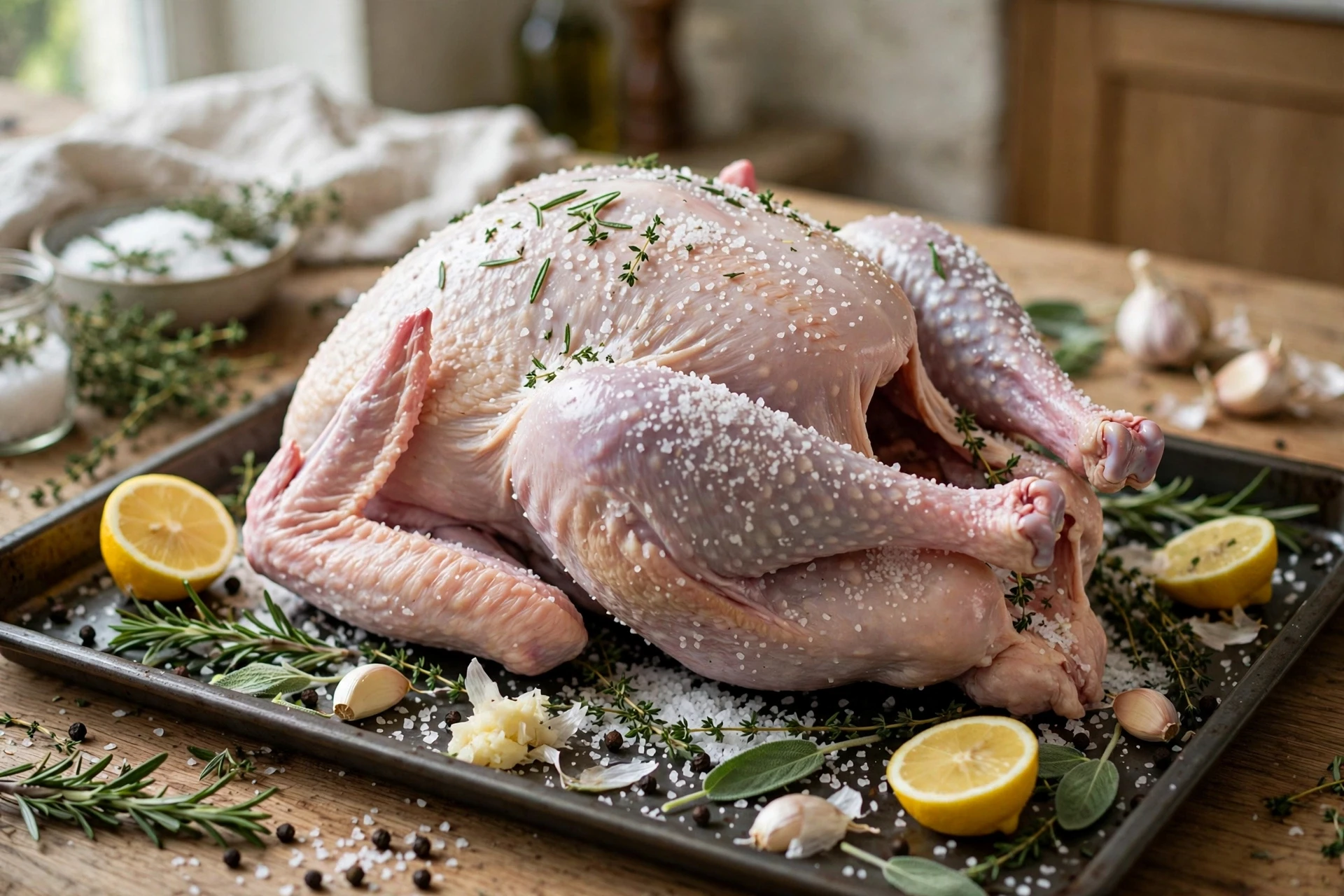
Dry brining means rubbing the turkey with salt (and any herbs or spices you like) and letting it rest uncovered in the fridge for 1–3 days. The salt first draws moisture out, then pulls it back in, seasoning the meat deeply — and because there is no bucket of water involved, it fits in a normal refrigerator.
Method in brief: Use about 1 tablespoon of kosher salt per 4–5 pounds of turkey, rub it all over and under the skin, refrigerate uncovered, then roast as in item 1. Best for: Anyone who wants well-seasoned, juicy meat without extra equipment. Practical tip: The uncovered fridge rest also dries the skin, which is the secret to an especially crisp finish — do not cover the bird on the last night.
3. Wet-Brined Turkey
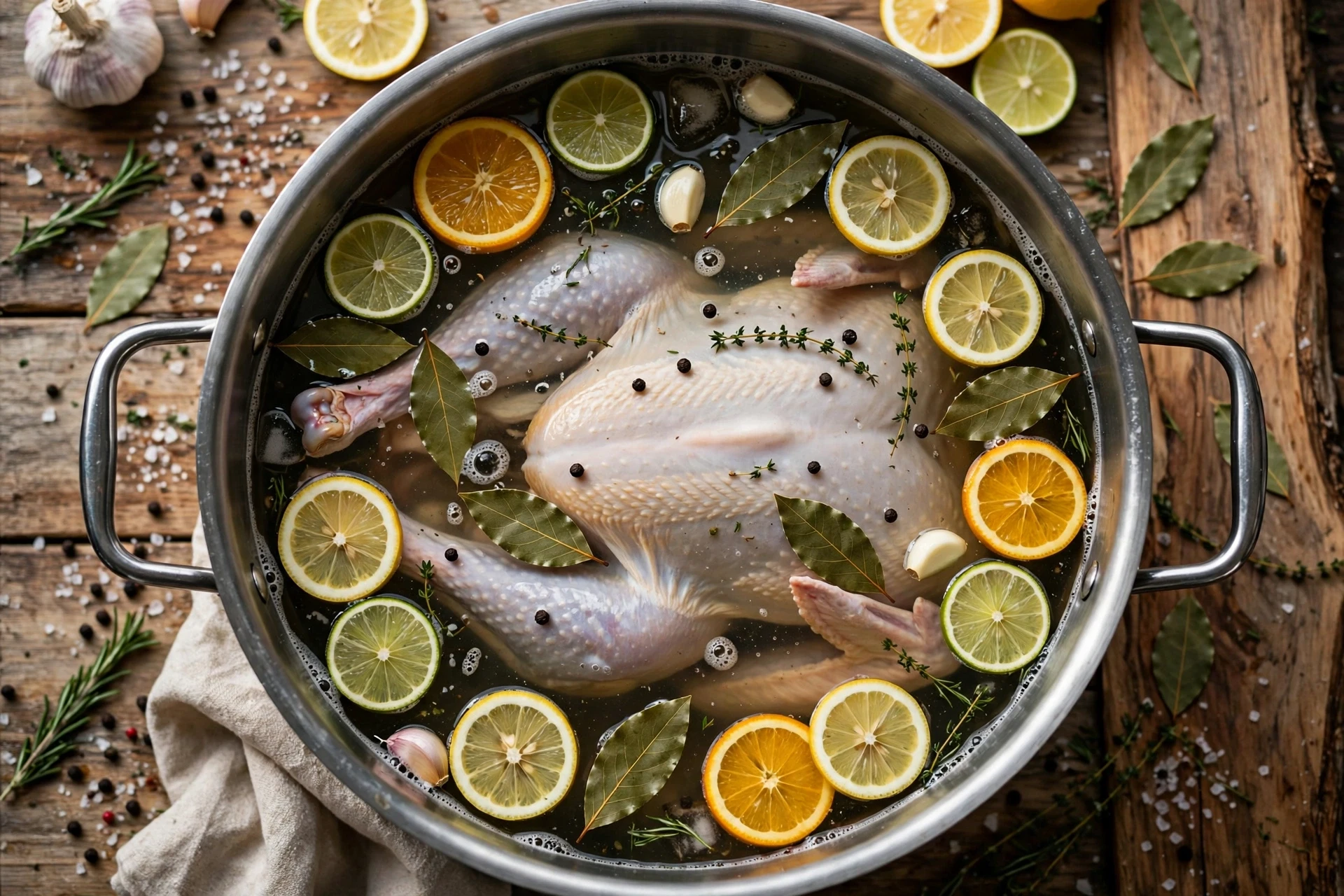
The traditional brine: the turkey soaks overnight in salted water, often with sugar, peppercorns, bay leaves, and citrus peel. The meat takes on water as well as salt, which makes wet brining the most forgiving method of all — a bird that runs slightly over temperature still eats juicy.
Method in brief: Dissolve about 1 cup of kosher salt (and ½ cup sugar, if using) in 2 gallons of cold water, submerge the turkey for 12–18 hours in the fridge or a cooler with ice, then pat very dry and roast. Best for: Cooks who worry about dry breast meat. Practical tip: Check the label first — many supermarket turkeys are already “enhanced” or self-basting, and brining one of those can make the meat taste too salty.
4. Spatchcocked (Butterflied) Turkey
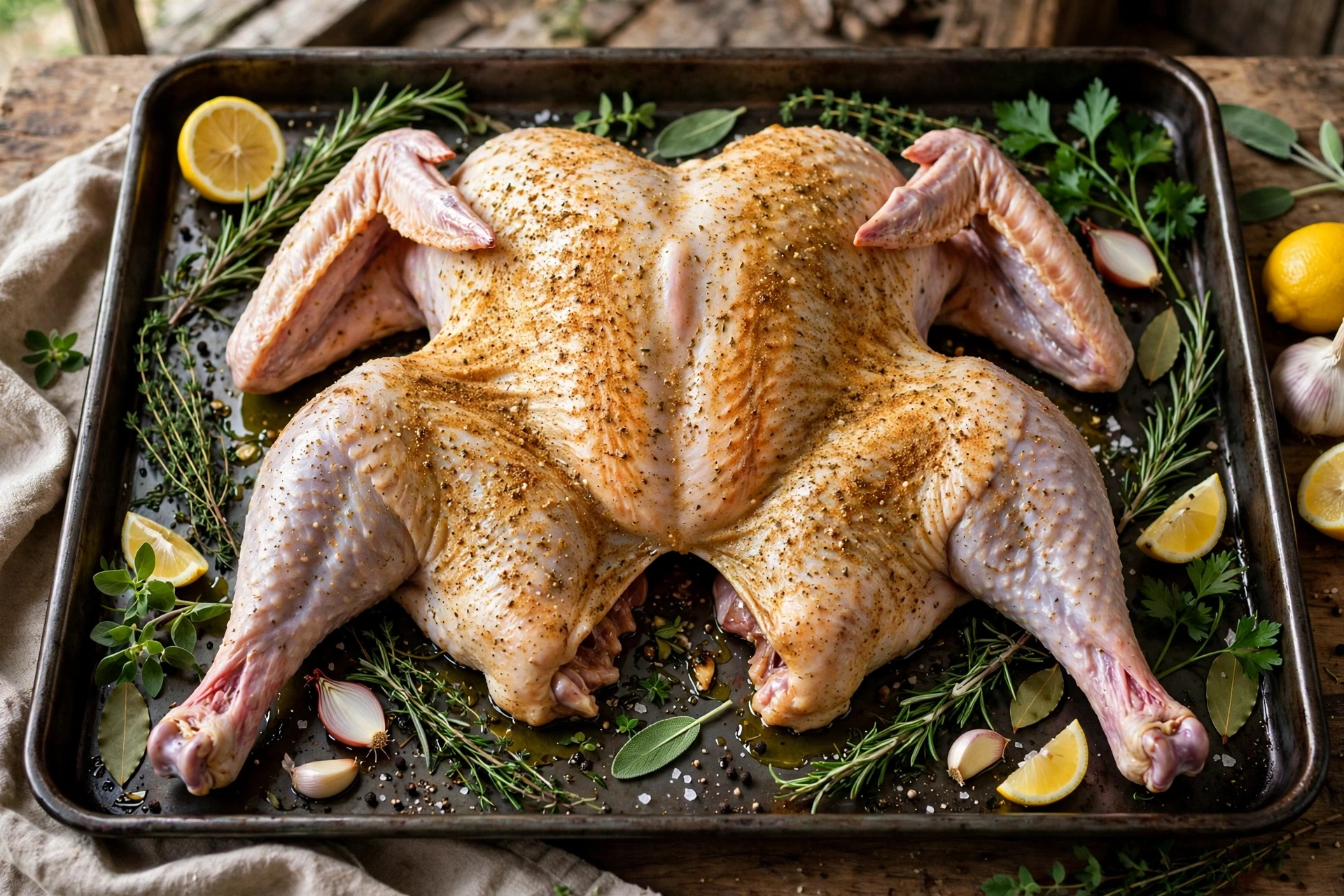
The backbone is removed and the bird is flattened before roasting. It looks dramatic, but the real appeal is practical: a flat turkey cooks dramatically faster and far more evenly, so the breast and thighs finish at the same time instead of racing each other.
Method in brief: Cut along both sides of the backbone with sturdy kitchen shears, press the bird flat, season well, and roast at 425–450°F (220–230°C) for roughly 70–90 minutes for a 12–14 pound bird, until both breast and thigh read 165°F (74°C). Best for: Tight schedules and anyone who likes crisp skin everywhere. Practical tip: Save the backbone for stock or gravy, and ask the butcher to spatchcock the bird for you if the shears work sounds heavy-going.
5. Smoked Turkey
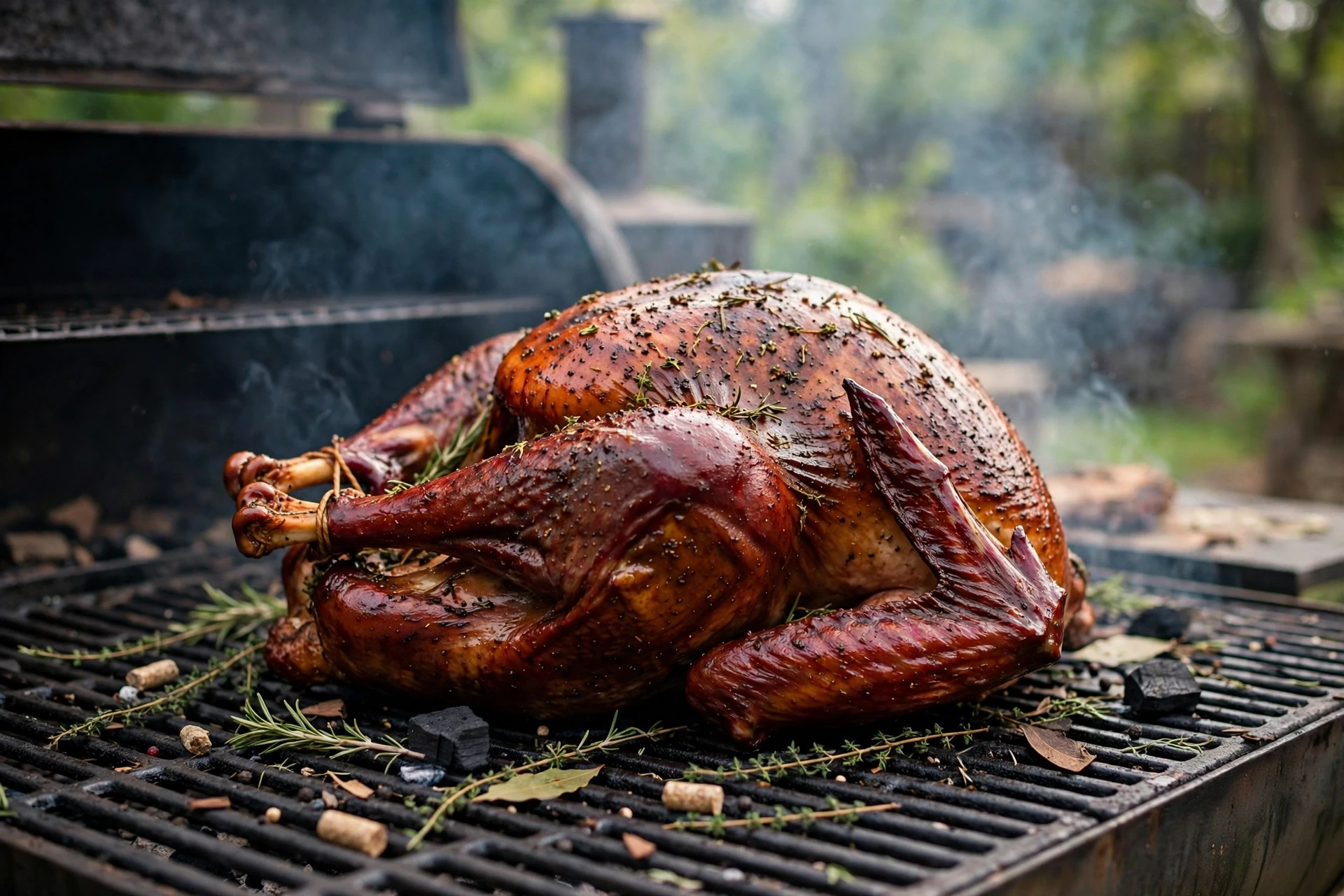
Cooking the turkey low and slow in a smoker gives deep, wood-fired flavour and mahogany-coloured skin no oven can match. The gentle heat keeps the meat moist, and the leftovers have a smokiness sandwiches were made for.
Method in brief: Smoke at 225–250°F (110–120°C) with a mild wood such as apple or cherry, allowing roughly 30 minutes per pound, finishing when the thigh reaches 165°F (74°C). Best for: Smoker owners and anyone whose oven is needed for sides all day. Practical tip: Mild fruit woods suit turkey better than strong hickory or mesquite, which can overpower the meat during a long cook — and keep the smoker closed as much as possible, because every peek adds time.
6. Grilled Turkey

A whole turkey cooked on the grill over indirect heat frees the oven entirely and picks up a gentle char and smoky edge. It works on gas or charcoal, as long as the grill is big enough for the bird to sit away from direct flame with the lid down.
Method in brief: Set up for indirect heat at around 325–350°F (165–175°C), place the turkey in a sturdy pan on the cool side, cover, and cook to 165°F (74°C) in the thigh, topping up charcoal as needed on a charcoal grill. Best for: Mild climates, big side-dish menus, and grill enthusiasts. Practical tip: The pan is not optional — it catches the drippings you will want for gravy and prevents flare-ups under the bird.
7. Deep-Fried Turkey

Frying produces the crispest skin and some of the juiciest meat of any method, and it cooks astonishingly fast. It is also the one method on this list that demands complete respect for safety: it must be done outdoors, on a flat non-flammable surface, well away from buildings, with a fully thawed, completely dry bird.
Method in brief: In a large outdoor fryer, heat peanut or another high-heat oil to 350°F (175°C), lower the thawed, patted-dry turkey in slowly, and fry about 3–4 minutes per pound, to 165°F (74°C) in the thigh. Best for: Experienced cooks with proper equipment and outdoor space. Safety notes: Never fry a frozen or partially frozen turkey, never do it in a garage or on a wooden deck, do not overfill the pot with oil, and keep a fire extinguisher nearby — water and hot oil must never meet.
8. Slow-Cooker Turkey Breast

For a small gathering, a bone-in or boneless turkey breast in the slow cooker is the lowest-effort route to tender, sliceable white meat. It will not give you crisp skin, but it will give you moist meat and gravy-ready juices with almost no attention during the day.
Method in brief: Season a 3–6 pound breast, set it on a bed of onions in the slow cooker with a little stock, and cook on Low for roughly 5–7 hours, until it reaches 165°F (74°C). Best for: Two-to-six-person dinners, small kitchens, and anyone cooking for a household that prefers white meat. Practical tip: If crisp skin matters, give the cooked breast a few minutes under a hot broiler at the end — or simply remove the skin and lean into the tenderness.
9. Instant Pot Turkey Breast

Pressure cooking is the fastest small-bird option: a turkey breast cooks in well under an hour, the meat stays moist, and the cooking liquid in the pot is halfway to gravy before you have done anything. It is also a good way to guarantee extra white meat alongside a whole roast bird.
Method in brief: A 3–4 pound boneless breast, seasoned and set on the trivet with stock below, pressure-cooks for roughly 6–8 minutes per pound plus a natural release of 10–15 minutes; confirm 165°F (74°C) before slicing. Best for: Last-minute cooks and small households. Practical tip: Check your pot’s capacity before shopping — a 6-quart cooker handles a breast of about 4 pounds comfortably, and an overfilled pot cooks unevenly.
10. Herb-Butter Roast Turkey
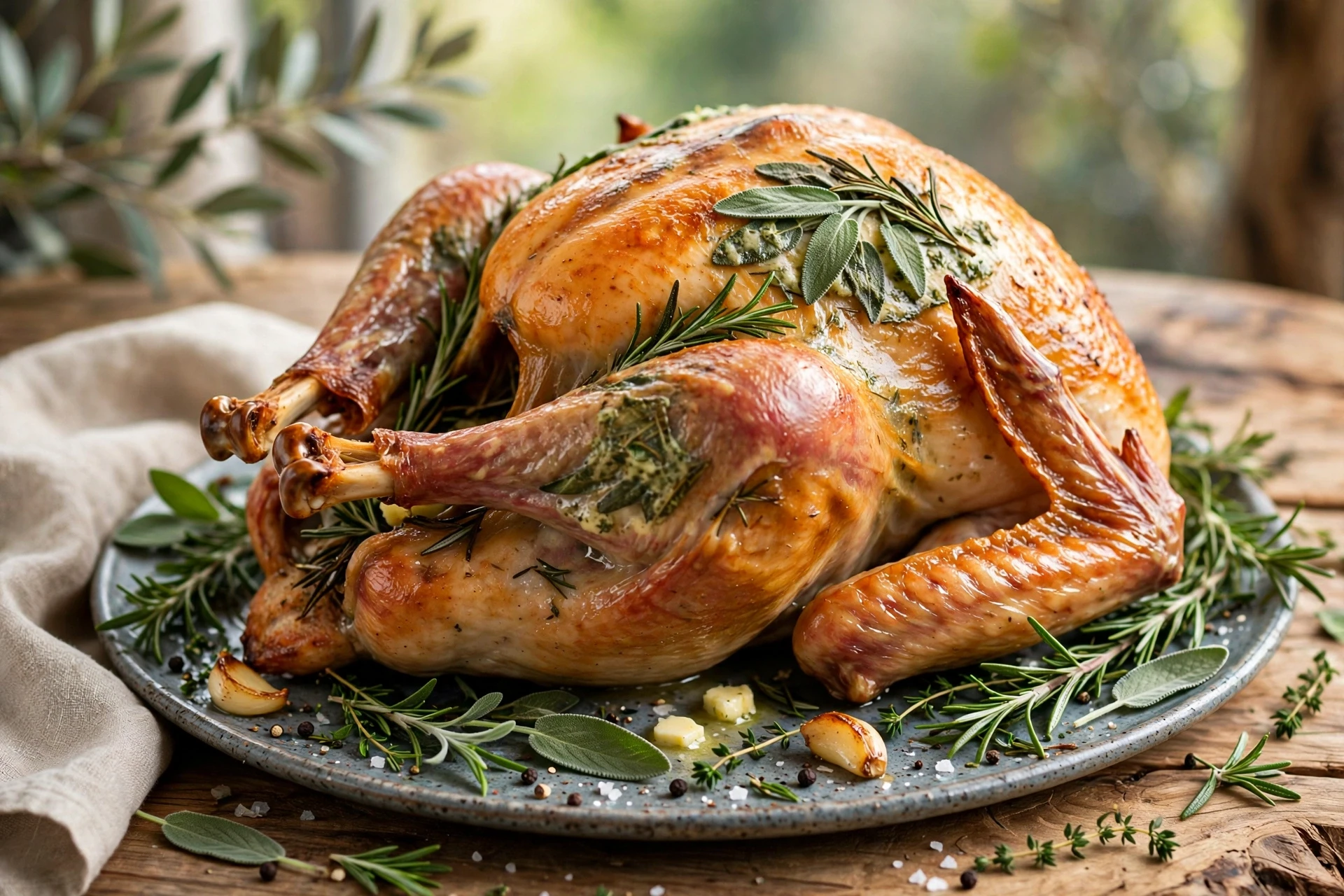
This is the classic roast (item 1) with one flavour-forward upgrade: softened butter mixed with chopped sage, thyme, rosemary, garlic, and lemon zest, pushed under the skin of the breast and rubbed over the whole bird. The butter bastes the meat from underneath as it melts, and the herbs perfume the drippings.
Method in brief: Loosen the skin gently with your fingers, spread most of the herb butter underneath and the rest on top, then roast at 325°F (165°C) to 165°F (74°C) in the thigh. Best for: Hosts who want one reliable step up from the basic roast. Practical tip: Make the herb butter up to 3 days ahead and refrigerate it; bring it back to a spreadable softness about an hour before you need it.
11. Maple-Glazed Turkey
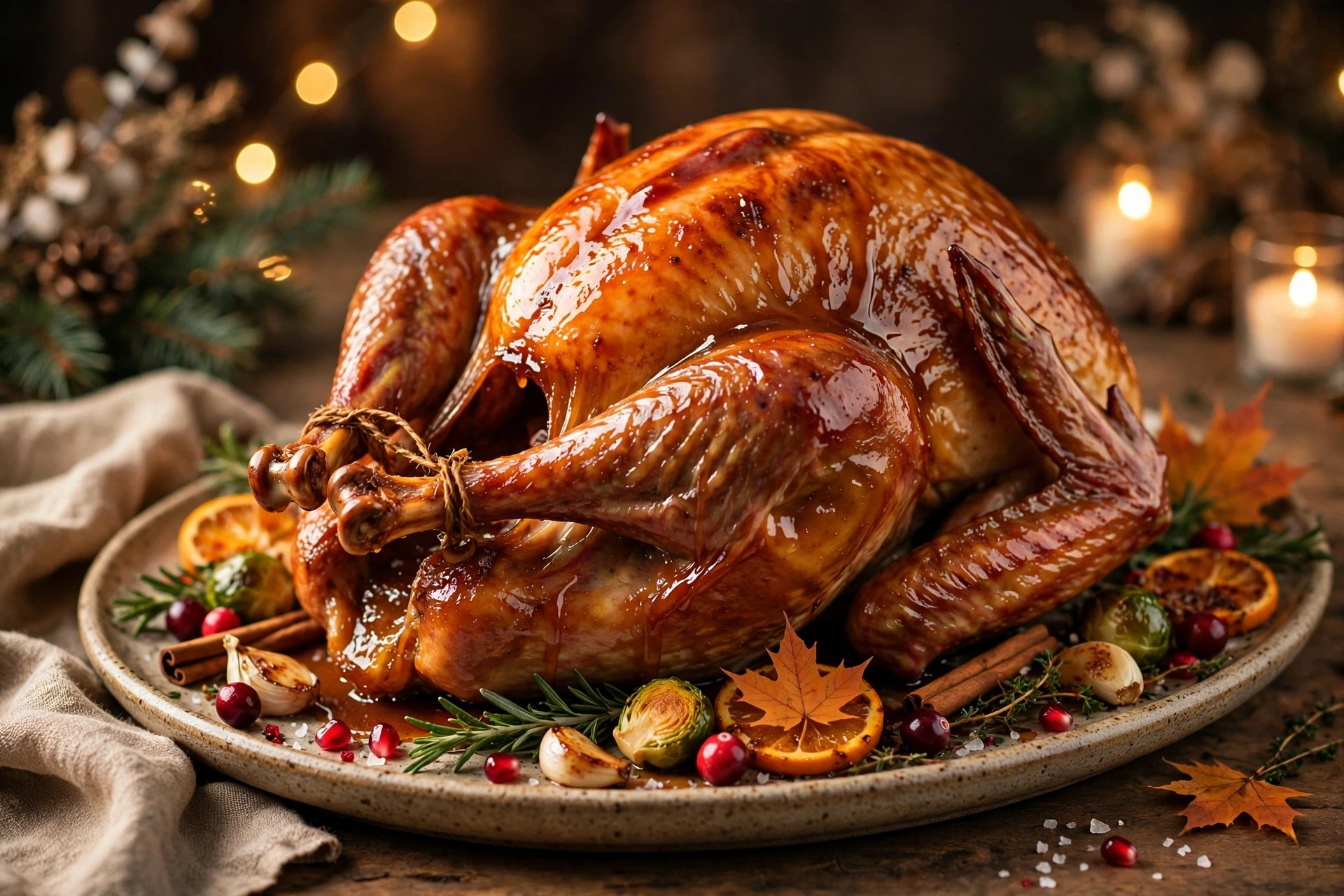
A lacquer of maple syrup, butter, and a little mustard or cider vinegar, brushed on during the last stretch of roasting, gives the skin a glossy, amber finish and a gentle sweetness that suits the whole Thanksgiving plate. The glaze goes on late — sugar burns if it goes on at the start.
Method in brief: Roast your usual way (brined or plain), then brush with the warm glaze every 10–15 minutes during the final 30–45 minutes, until the skin is shiny and caramelised and the thigh reads 165°F (74°C). Best for: Anyone who loves the sweet-savoury edge of the holiday table. Practical tip: Foil the breast if it colours too quickly — a glaze can go from amber to dark in minutes, so stay nearby for that final half hour.
12. Cajun-Spiced Turkey
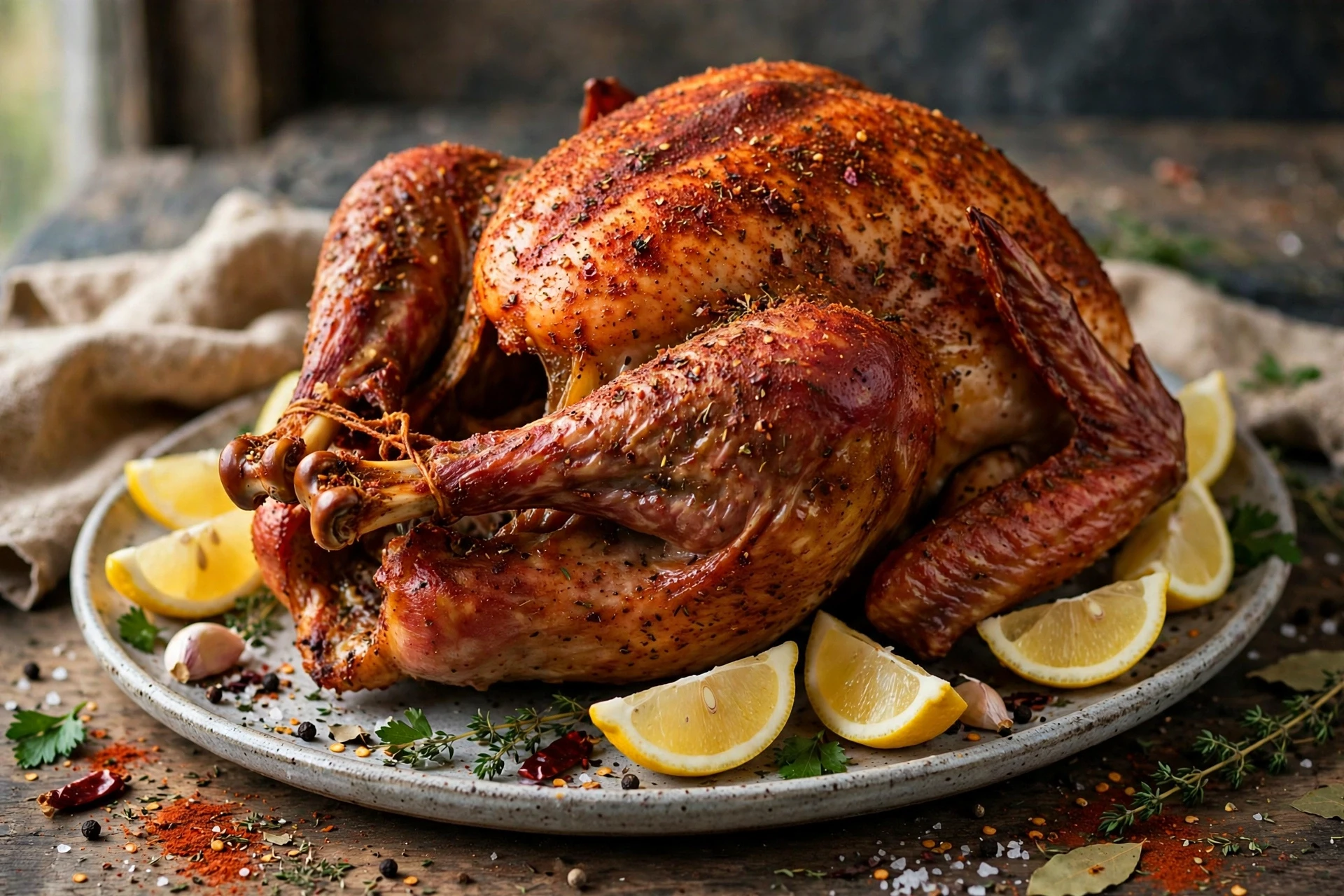
A bold, Louisiana-leaning take: the bird is rubbed (or injected, in the style often used for fried turkeys) with a Cajun seasoning blend — paprika, garlic, onion, cayenne, thyme, and oregano — for skin with real warmth and a deep brick-red colour. It roasts or fries exactly like the plainer versions; only the seasoning changes.
Method in brief: Rub the spice mix all over, under the skin, and inside the cavity, rest overnight if you can, then roast at 325°F (165°C) or deep-fry as in item 7, to 165°F (74°C). Best for: Tables that find the classic bird a bit plain, and fans of a little heat. Practical tip: If your spice blend contains salt, skip any separate salting step, and consider serving something cool and creamy alongside — it balances the heat nicely across the meal.
13. Garlic and Rosemary Turkey
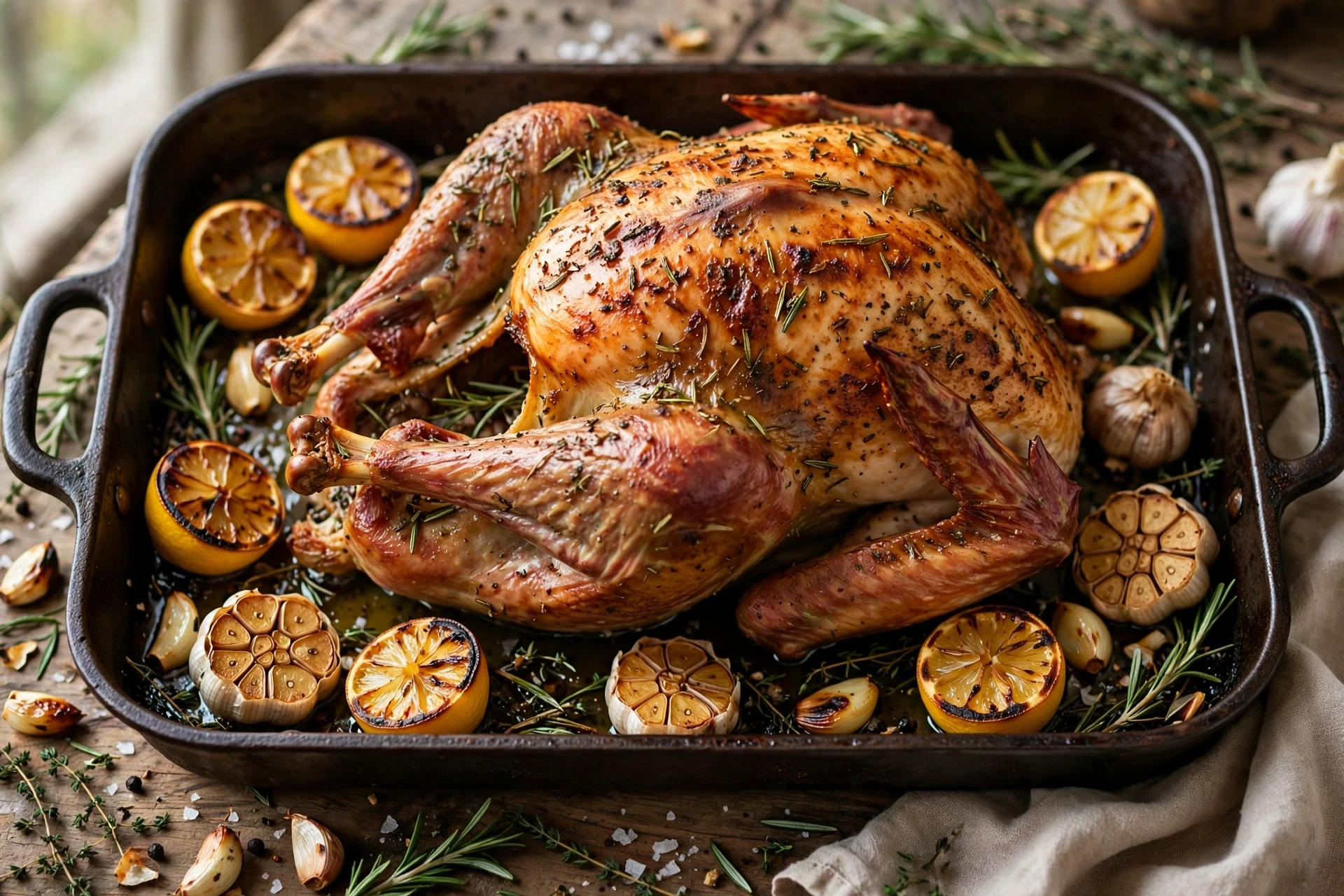
A Mediterranean-leaning roast built on garlic, fresh rosemary, lemon, and olive oil or butter. The flavour is clean and savoury rather than sweet-herbal, the pan drippings make an excellent light gravy, and the whole approach suits cooks who find sage-heavy seasoning too much.
Method in brief: Rub the bird with crushed garlic, chopped rosemary, lemon zest, salt, and oil or softened butter; stuff the cavity with the lemon halves and rosemary sprigs; roast at 325°F (165°C) to 165°F (74°C) in the thigh. Best for: A slightly fresher-tasting menu, and anyone planning Mediterranean-style sides. Practical tip: Garlic under the skin flavours the meat without burning; garlic spread on top of the skin in a hot oven can scorch bitter, so tuck most of it underneath.
14. Turkey Roulade (Rolled Turkey Breast)
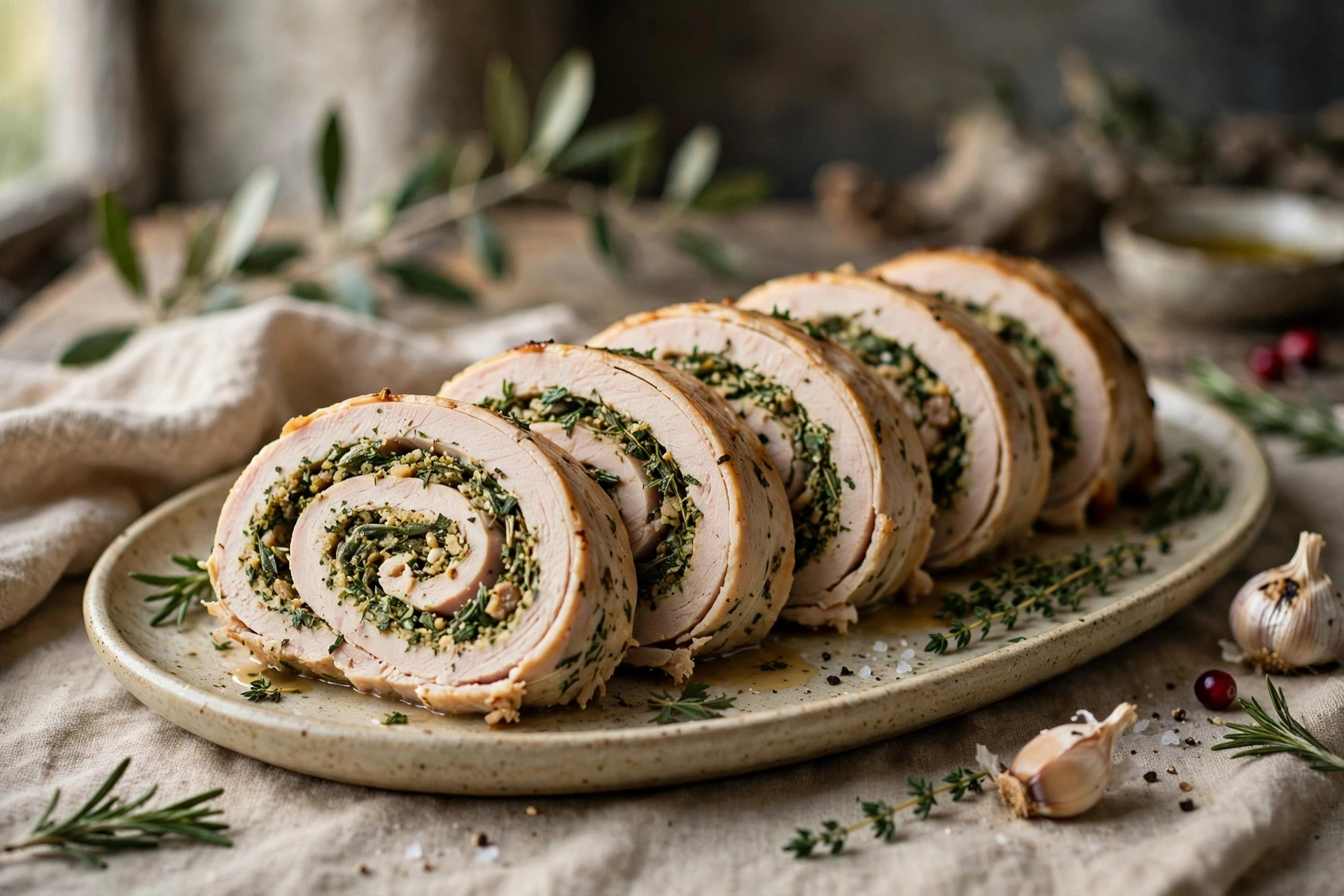
A boneless turkey breast, butterflied, spread with a savoury filling — think herbed breadcrumbs, spinach, or a sausage mixture — then rolled, tied, and roasted. It slices into neat spirals, cooks evenly, carves without any wrestling, and looks far more elaborate than it is.
Method in brief: Pound the breast to an even thickness, season and fill it, roll it up tightly, tie with kitchen string, and roast at 375°F (190°C) for roughly 50–70 minutes for a 2–3 pound roulade, until the centre reaches 165°F (74°C). Best for: Small, elegant dinners and cooks who enjoy one showpiece dish. Practical tip: Rest it a full 15 minutes and slice with your sharpest knife in thick rounds — rushed carving squeezes out the juices and unravels the spiral.
15. Small Turkey or Turkey Crown for Small Gatherings
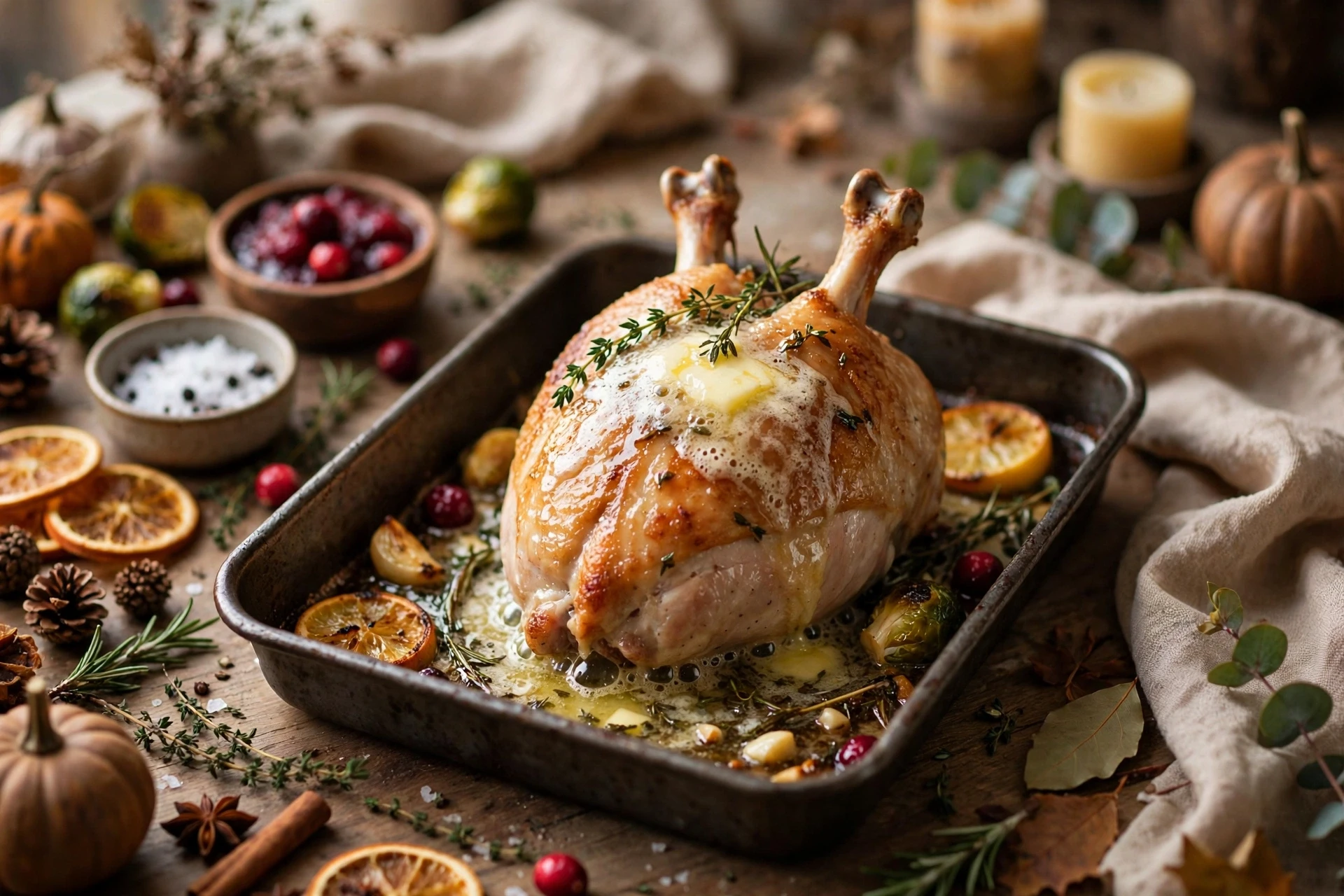
Not every Thanksgiving needs a 16-pound bird. A small whole turkey of 8–10 pounds, or a turkey crown — the breast still on the bone, with legs removed — cooks faster, fits a small oven, and produces almost no waste, while still giving you a proper centrepiece to bring to the table.
Method in brief: Roast either option at 325–350°F (165–175°C): roughly 2–2½ hours for a small whole bird, and about 15–20 minutes per pound for a crown, both to 165°F (74°C) in the thickest part of the breast. Best for: Gatherings of two to six, and anyone who dreads a week of leftovers. Practical tip: A crown benefits from butter or a few strips of bacon over the breast, because without the legs shielding it, the exposed meat can dry at the edges before the centre finishes.
A Simple Turkey Day Timeline
- 3–4 days before: Move a frozen turkey to the fridge to thaw (see the planning section); buy or order a fresh bird for pickup.
- 1–3 days before: Start a dry brine (item 2). Make stock from giblets or a backbone, if you like, and clear fridge space.
- The day before: Start a wet brine (item 3); make herb butter (item 10) or spice rubs (item 12); take the turkey out of any packaging and pat it dry.
- Morning of: Take the bird out of the fridge about an hour before cooking; season, truss, or set up the smoker, grill, or slow cooker.
- While the turkey cooks: Rotate oven time with your side dishes, and start checking internal temperature early rather than late.
- While the turkey rests (20–40 minutes): Make the gravy from the drippings, finish the sides, and warm the plates.
Conclusion
The best Thanksgiving turkey idea is the one that fits your day: dry-brine the classic roast for insurance and crisp skin, spatchcock if the clock is against you, smoke or grill if the oven is spoken for, and scale down to a breast, roulade, or crown if the table is small. Whichever bird you choose, pair it with low-effort company — our 19 Easy Thanksgiving Side Dishes That Practically Make Themselves are built to be prepped ahead and baked around the turkey’s schedule, so everything lands hot at once.
Frequently Asked Questions
How long does a turkey take to thaw?
In the fridge, allow about 24 hours for every 4–5 pounds — so 3 days for a 12-pound bird and up to 4–5 days for a 20-pound one. In cold water, plan on roughly 30 minutes per pound, refreshing the water every 30 minutes, and cook the turkey straight away once it has thawed.
What internal temperature should Thanksgiving turkey reach?
165°F (74°C), checked with a meat thermometer in the thickest part of the thigh without touching bone, and ideally confirmed in the breast as well. Let the turkey rest for 20–40 minutes afterwards — the temperature holds, the juices settle back into the meat, and carving becomes much cleaner.
Which method is best for a first Thanksgiving turkey?
A classic roast (item 1) needs the least equipment, but the most forgiving choice for a beginner is a dry-brined roast (item 2): salting 1–3 days ahead seasons the meat all the way through, keeps it juicy even if it runs a few minutes over, and helps the skin crisp. For a very small first attempt, a slow-cooker or Instant Pot breast (items 8 and 9) removes the whole-bird pressure entirely.




One Comment