21 High Protein Meal Prep Breakfast Ideas (25g+ Protein, Make-Ahead)
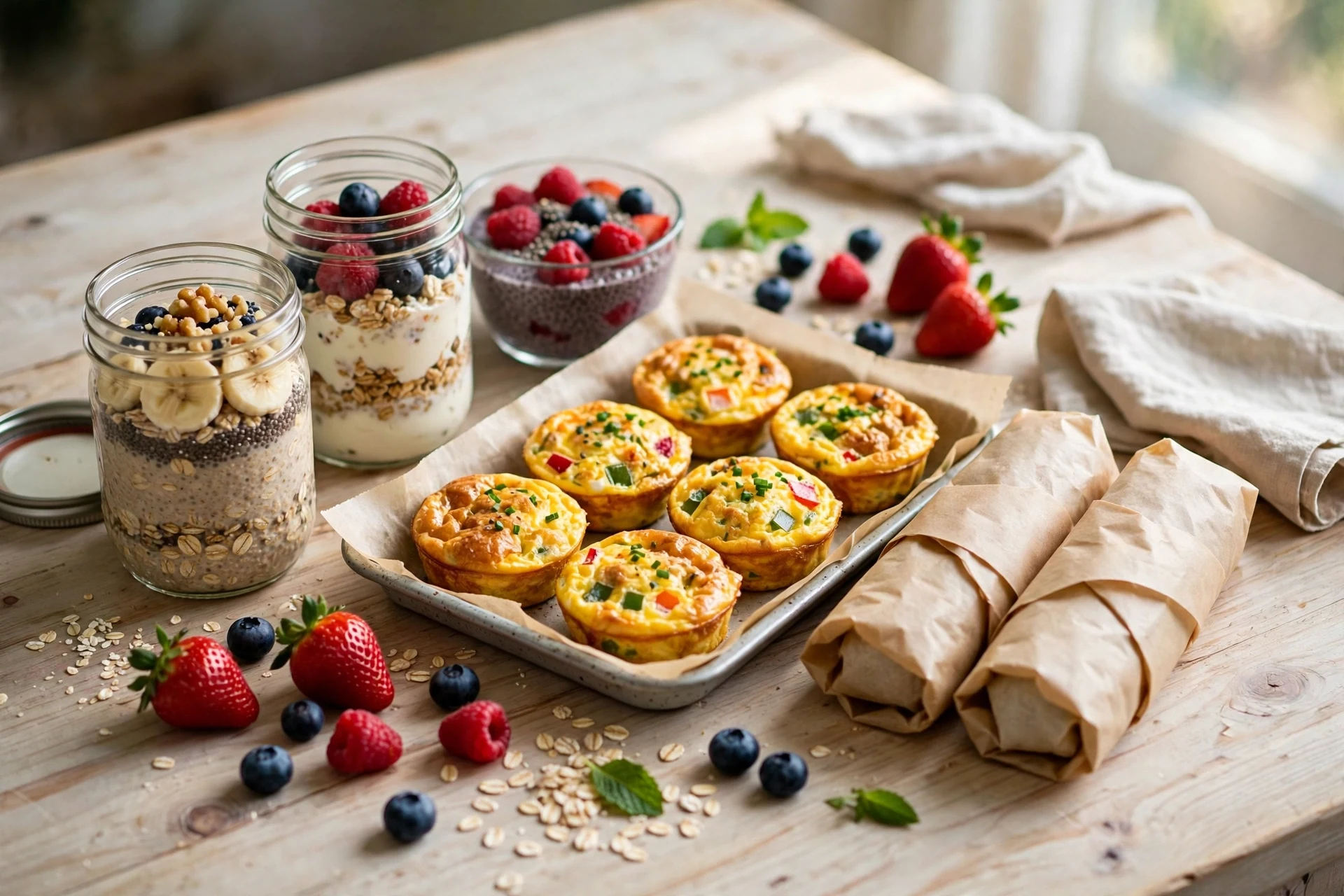
A high protein meal prep breakfast means you cook once and eat well all week. Each idea below packs 25 grams of protein or more per serving, so you stay full until lunch without cooking every morning. Pick two or three recipes, spend about an hour on Sunday, and your weekday breakfasts are already in the fridge or freezer, ready to heat and eat.
Most breakfasts fail because they are too light. A pastry or a bowl of plain cereal leaves you hungry by 10 a.m. Protein changes that. Eggs, Greek yogurt, cottage cheese, beans, and turkey all digest slowly, so a protein-rich breakfast keeps you full for hours. This list gives you 21 make-ahead options, from no-cook jars to freezer burritos, with the protein per serving listed for every one.
Why High Protein Meal Prep Breakfast Works
Breakfast is the meal most people skip or rush. A little planning on Sunday fixes the whole week. You batch-cook two savory options, assemble two no-cook jars, and freeze a batch of something sweet. That is five mornings handled in about an hour, and every serving carries at least 25 grams of protein.
Protein also makes meal prep easier, not harder. Eggs bake into muffins and squares that reheat well. Greek yogurt and cottage cheese need no cooking at all. Beans and turkey freeze without losing texture. The recipes below were picked because they hold up in the fridge for 3 to 4 days or in the freezer for 1 to 3 months, and because they still taste good on day four, not just day one.
How Much Protein Should Breakfast Have?
Most adults do well with 25 to 30 grams of protein at breakfast. That is enough to stay full until lunch and to support muscle, especially if you train in the morning. Every idea in this list clears 25 grams per serving, and several pass 30.
| Goal | Protein per breakfast | What that looks like |
|---|---|---|
| Stay full until lunch | 25g | Two eggs plus Greek yogurt, or a yogurt jar with peanut butter |
| Active mornings or workouts | 30g | An egg bake square, or overnight oats with yogurt and protein powder |
| Big protein target | 35g+ | A chicken burrito bowl, or a turkey spinach egg bake with cottage cheese |
Protein and calorie figures in this article are estimates based on USDA FoodData Central values for the main ingredients. Exact numbers change with brands and portion sizes, so use them as a guide, not a lab result.
Meal Prep Breakfast at a Glance
| Idea | Protein | Calories (est.) | Fridge | Freezer |
|---|---|---|---|---|
| 1. Greek Yogurt Protein Parfait | ~30g | 320 | 3–4 days | No |
| 2. Overnight Protein Oats | ~28g | 380 | 3–5 days | Up to 2 months |
| 3. Cottage Cheese Berry Bowl | ~27g | 290 | 3–4 days | No |
| 4. Chia Pudding Power Jar | ~25g | 310 | 3–4 days | No |
| 5. Peanut Butter Banana Yogurt Jar | ~26g | 340 | 3–4 days | No |
| 6. Turkey Spinach Egg Bake | ~37g | 378 | 3–4 days | 2–3 months |
| 7. Blender Egg White Bites | ~30g | 222 | 3–4 days | 2–3 months |
| 8. Cottage Cheese Egg Bites | ~28g | 260 | 3–4 days | 2–3 months |
| 9. Buffalo Chicken Egg Muffins | ~29g | 300 | 3–4 days | 2–3 months |
| 10. Sheet-Pan Egg & Veggie Squares | ~25g | 280 | 3–4 days | 2–3 months |
| 11. Black Bean & Egg Breakfast Burritos | ~26g | 410 | 3 days | 1–2 months |
| 12. Turkey Sausage Egg Muffin Sandwiches | ~25g | 340 | 3 days | 1–2 months |
| 13. Chicken Breakfast Burrito Bowls | ~35g | 450 | 3–4 days | 2 months |
| 14. Freezer Breakfast Quesadillas | ~27g | 380 | 3 days | 1–2 months |
| 15. Cottage Cheese Protein Pancakes | ~30g | 386 | 3–4 days | 2–3 months |
| 16. Protein Banana Waffles | ~26g | 350 | 3–4 days | 2–3 months |
| 17. Double-Chocolate Protein Muffins | ~26g | 290 | 4 days | 2–3 months |
| 18. Baked Oats with Protein Powder | ~25g | 330 | 4 days | Up to 3 months |
| 19. Banana Protein Smoothie + Chia Pudding | ~28g | 360 | 2 days | Chia jar: No |
| 20. High-Protein Smoothie Freezer Packs | ~25g | 300 | — | Up to 3 months |
| 21. Tofu Scramble Freezer Boxes | ~25g | 320 | 3–4 days | 2 months |
No-Cook Jars & Bowls (25g+ Protein)
No-cook breakfasts are the fastest win in meal prep. You assemble jars in ten minutes on Sunday, and each morning you just grab one from the fridge. Greek yogurt and cottage cheese do the heavy lifting here, so every jar below clears 25 grams of protein with zero stove time.
1. Greek Yogurt Protein Parfait
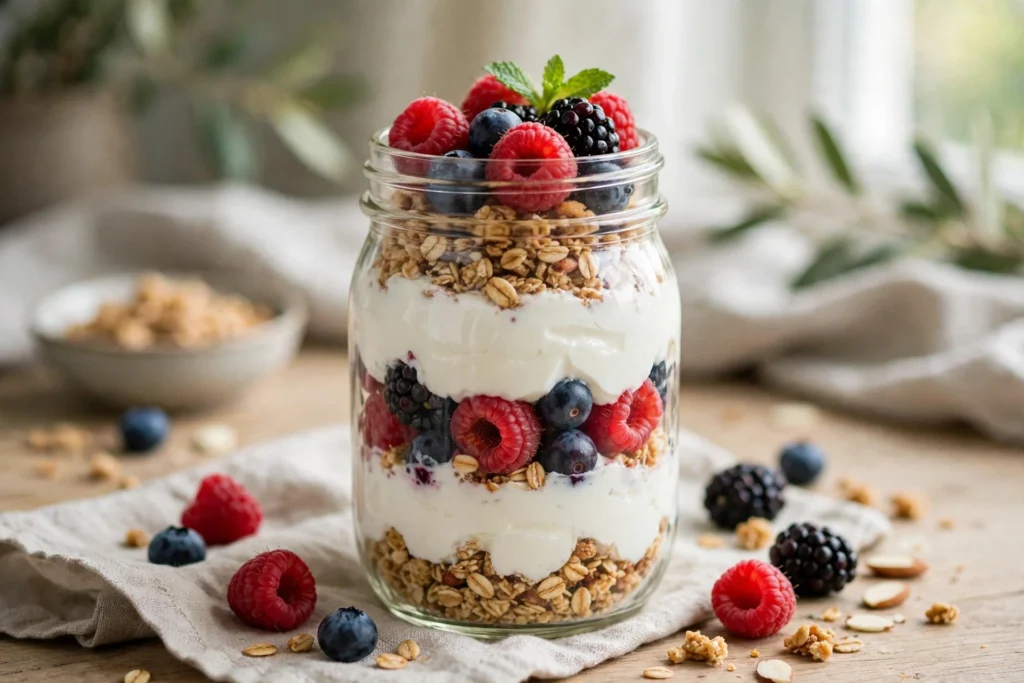
Layer thick Greek yogurt with berries and granola in a jar, and keep the granola in a small separate bag so it stays crunchy. One jar starts with about a cup of yogurt, which already gives you around 17 grams of protein, and a spoonful of peanut butter on top pushes it close to 30.
Make four jars at once and they hold 3 to 4 days in the fridge. Swap the berries for sliced banana or mango when you want a change, and use plain yogurt so you control the sweetness. Protein: ~30g per serving.
Tip: Add the granola only in the morning. Stirred in on Sunday, it turns soft by Tuesday.
2. Overnight Protein Oats
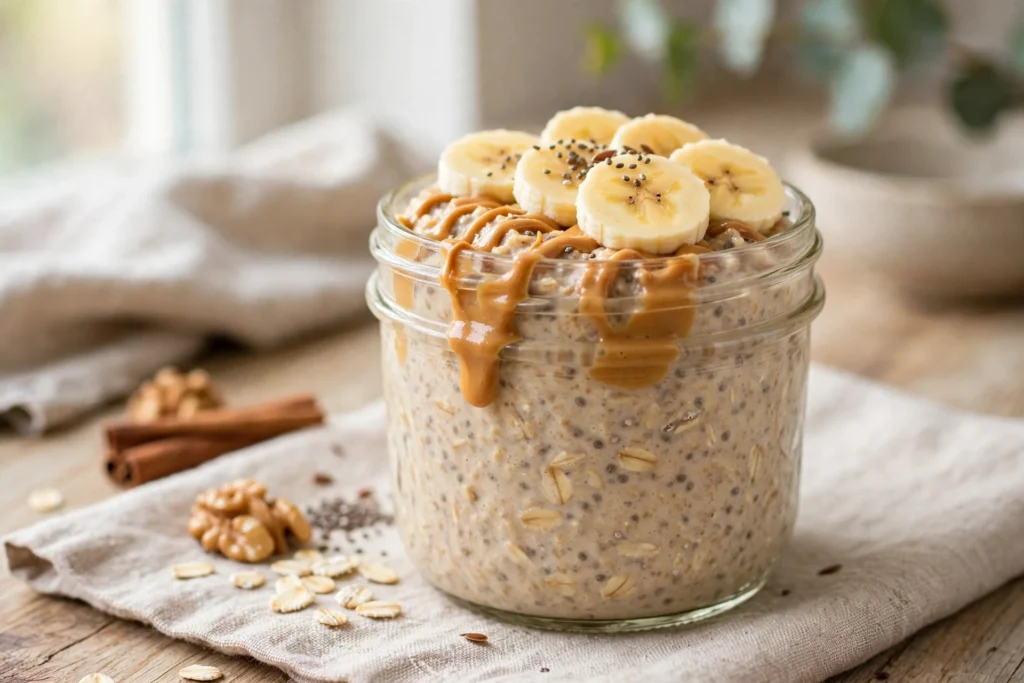
Stir rolled oats with milk, Greek yogurt, chia seeds, and a scoop of vanilla protein powder, then let the jar sit overnight. By morning the oats are soft and creamy, and the jar is ready to eat cold with no cooking at all.
One jar lands near 28 grams of protein, and it keeps 3 to 5 days in the fridge. Make a few flavors at once: peanut butter and banana, cocoa and cherry, or cinnamon apple. Protein: ~28g per serving.
Tip: Use a 1-to-1 ratio of oats to liquid by volume. More liquid makes soupy oats, and less leaves them dry.
3. Cottage Cheese Berry Bowl
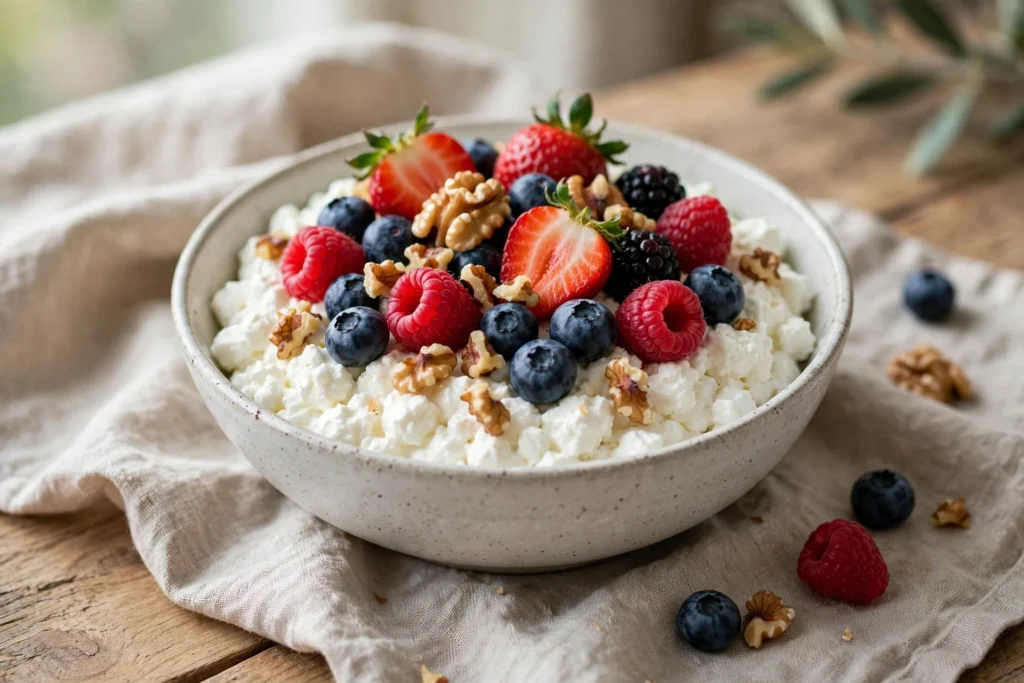
Spoon cottage cheese into a container and top it with mixed berries, a drizzle of honey, and a few crushed walnuts. It takes two minutes to build and needs no cooking, which makes it the easiest high-protein breakfast on this list.
A cup of cottage cheese carries about 24 grams of protein on its own, so the bowl lands near 27 grams with the nuts. Prep the cheese base ahead and add the berries in the morning so they stay fresh. Protein: ~27g per serving.
Tip: Blend the cottage cheese smooth if you do not like the curds. It turns into a thick, yogurt-like cream.
4. Chia Pudding Power Jar
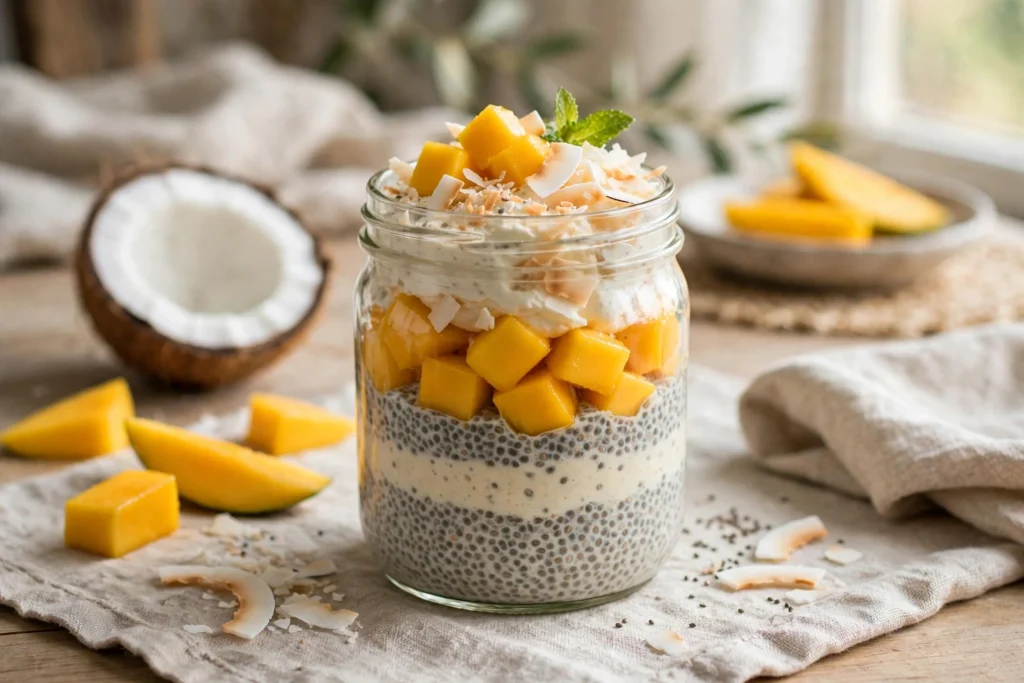
Whisk chia seeds into milk with Greek yogurt and a little vanilla, then chill it for at least four hours. The seeds swell into a thick pudding that holds its shape in a jar all week.
Chia adds fiber and a few grams of protein, while the yogurt does the real work, bringing the jar to about 25 grams. Layer it with mango or cocoa for two flavors from one batch. Protein: ~25g per serving.
Tip: Stir the jar once after 15 minutes. That stops the seeds from clumping at the bottom.
5. Peanut Butter Banana Yogurt Jar

Spread peanut butter around the inside of a jar, add Greek yogurt and banana slices, and finish with a few oats for crunch. It tastes like dessert and still clears 25 grams of protein.
The yogurt gives you about 17 grams and the peanut butter adds 8 more, so the jar lands near 26 grams. It keeps 3 to 4 days in the fridge, and the banana stays fine for two days if you add a squeeze of lemon. Protein: ~26g per serving.
Tip: Warm the peanut butter for ten seconds before spreading it. It coats the jar in a thin, even layer.
Egg Bakes & Muffins
Eggs are the backbone of breakfast meal prep because they bake in batches and reheat well. One muffin tin or one baking dish gives you four to six servings, and everything below freezes for 2 to 3 months, so a single Sunday session can stock two weeks of breakfasts.
6. Turkey Spinach Egg Bake
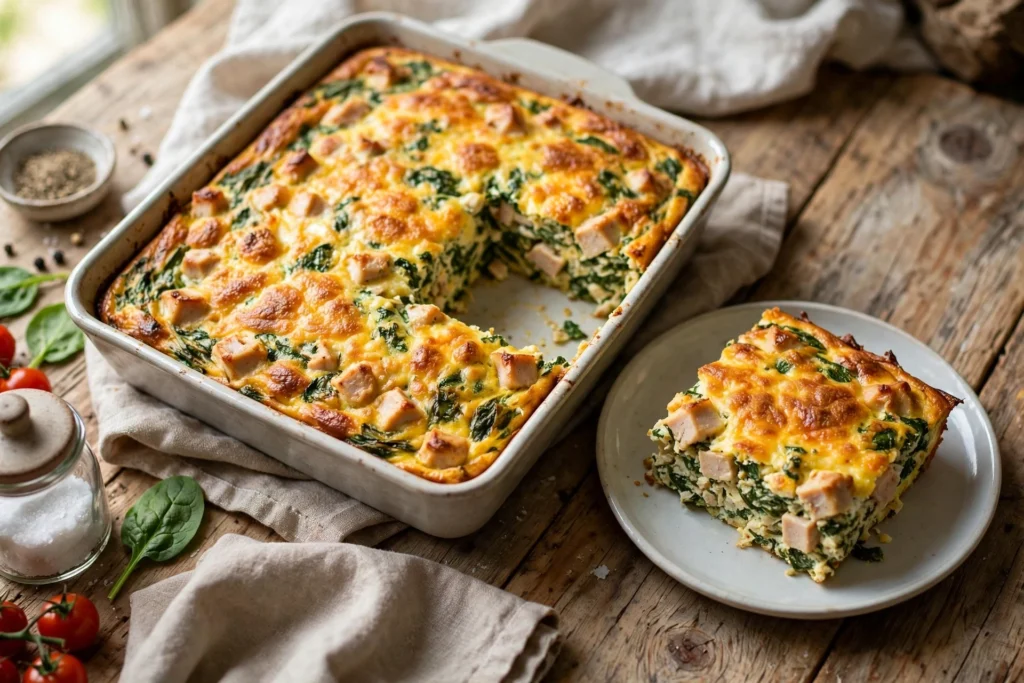
Whisk a dozen eggs with cottage cheese, browned ground turkey, and a big handful of spinach, then bake it in a square dish until just set. Cut it into six squares, and each one carries about 37 grams of protein, the highest on this list.
The squares hold 3 to 4 days in the fridge and freeze for 2 to 3 months. Reheat one square in the microwave for 45 seconds, or in the air fryer at 300°F for 3 to 4 minutes for a firmer edge. Protein: ~37g per serving.
Tip: Squeeze the cooked spinach dry before mixing it in. Wet spinach makes the bake watery on day two.
7. Blender Egg White Bites

Blend egg whites with cottage cheese, a little shredded cheese, and salt, then pour the mix into a muffin tin and bake. The blender does all the work, and the bites come out light and fluffy, like the coffee-shop version.
Four bites give you about 30 grams of protein for around 220 calories, which makes them the leanest option here. They freeze well, so make a double batch and thaw overnight in the fridge. Protein: ~30g per 4 bites.
Tip: Bake them in a water bath (a larger pan with an inch of hot water) for a soft, custardy center instead of a dry one.
8. Cottage Cheese Egg Bites

Blend whole eggs with cottage cheese until smooth, pour into a greased muffin tin, and add your favorite mix-ins: diced peppers, ham, or mushrooms. The cottage cheese keeps the bites moist even after reheating.
Two bites land near 28 grams of protein, and a batch of twelve covers six breakfasts. They keep 3 to 4 days in the fridge and 2 to 3 months in the freezer. Protein: ~28g per 2 bites.
Tip: Let the bites cool fully in the tin before you take them out. Warm egg bites tear, and cool ones pop out clean.
9. Buffalo Chicken Egg Muffins

Mix shredded cooked chicken with buffalo sauce, whisked eggs, and a little cheese, then bake in a muffin tin. They are bold, savory, and nothing like a plain egg muffin, which is exactly why they survive a whole week of repeats.
Each serving of two muffins carries about 29 grams of protein. Use rotisserie chicken to skip a cooking step, and keep the sauce mild if you are packing these for kids. Protein: ~29g per serving.
Tip: Add a spoonful of ranch or blue cheese dip in a separate small container. It keeps the muffins from drying out in the microwave.
10. Sheet-Pan Egg & Veggie Squares
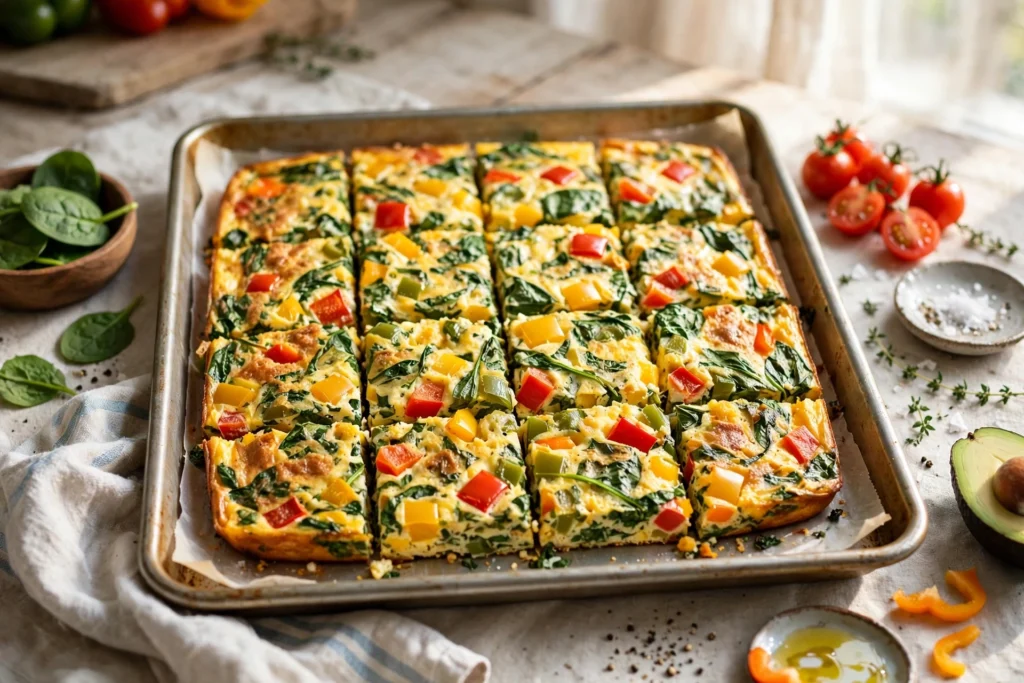
Pour whisked eggs over sautéed peppers, onions, and spinach on a sheet pan, bake until set, and slice into squares. One pan makes eight servings, and the squares stack neatly in containers for the week.
Each square lands near 25 grams of protein, and the vegetables add fiber that keeps you full longer. They reheat in 30 seconds in the microwave, or you can eat them cold in a sandwich. Protein: ~25g per serving.
Tip: Line the pan with parchment and leave an overhang on two sides. You can lift the whole egg slab out and slice it cleanly.
Burritos & Sandwiches
Handheld breakfasts are the ones you actually eat on busy mornings, because they travel well and need no fork. Wrap each one on its own, label the bag with the date, and you have grab-and-go breakfasts for one to two months in the freezer.
11. Black Bean & Egg Breakfast Burritos
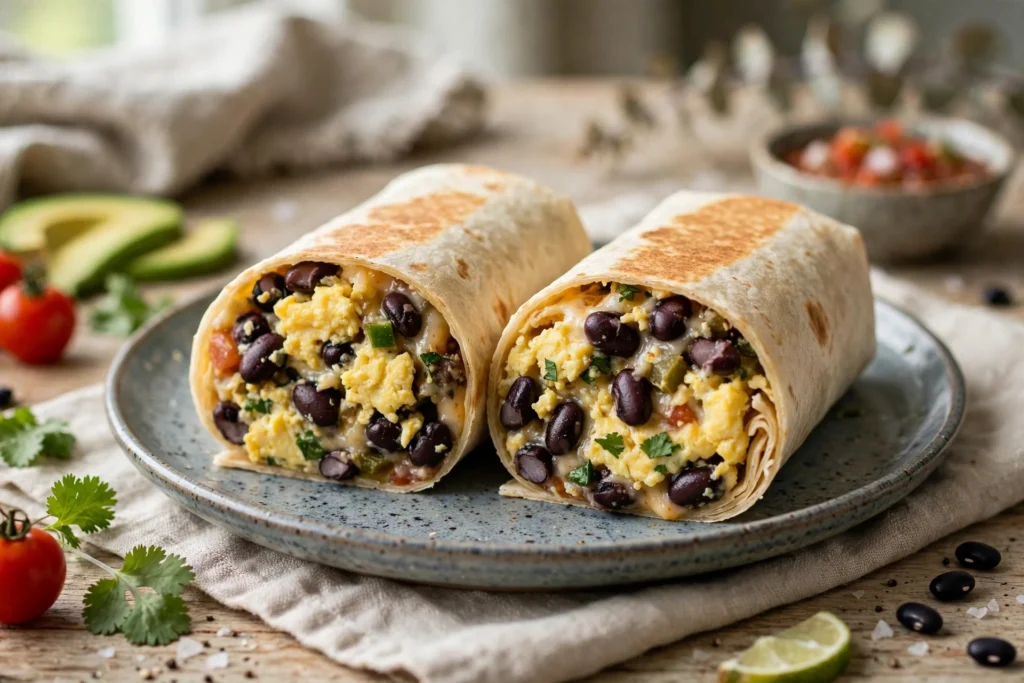
Scramble eggs with black beans, bell peppers, and cheese, then roll the mix into large tortillas and wrap each burrito in foil. Beans add fiber and protein, so one burrito lands near 26 grams of protein and keeps you full for hours.
They hold 3 days in the fridge and 1 to 2 months in the freezer. Reheat from frozen in the microwave for 1 to 2 minutes, or in the air fryer at 350°F for 10 to 12 minutes for a crisp shell. Protein: ~26g per serving.
Tip: Cool the filling fully before wrapping. Warm filling steams inside the foil and turns the tortilla soggy.
12. Turkey Sausage Egg Muffin Sandwiches

Cook turkey sausage patties and egg rounds, stack them with cheese on English muffins, and wrap each sandwich in parchment. They are the homemade version of the drive-thru sandwich, with more protein and less salt.
One sandwich carries about 25 grams of protein. Make eight at once and freeze them, then reheat one in the microwave for 1 minute in the morning. Protein: ~25g per serving.
Tip: Put the cheese against the egg, not the muffin. It melts into the egg and keeps the bread from going soft.
13. Chicken Breakfast Burrito Bowls
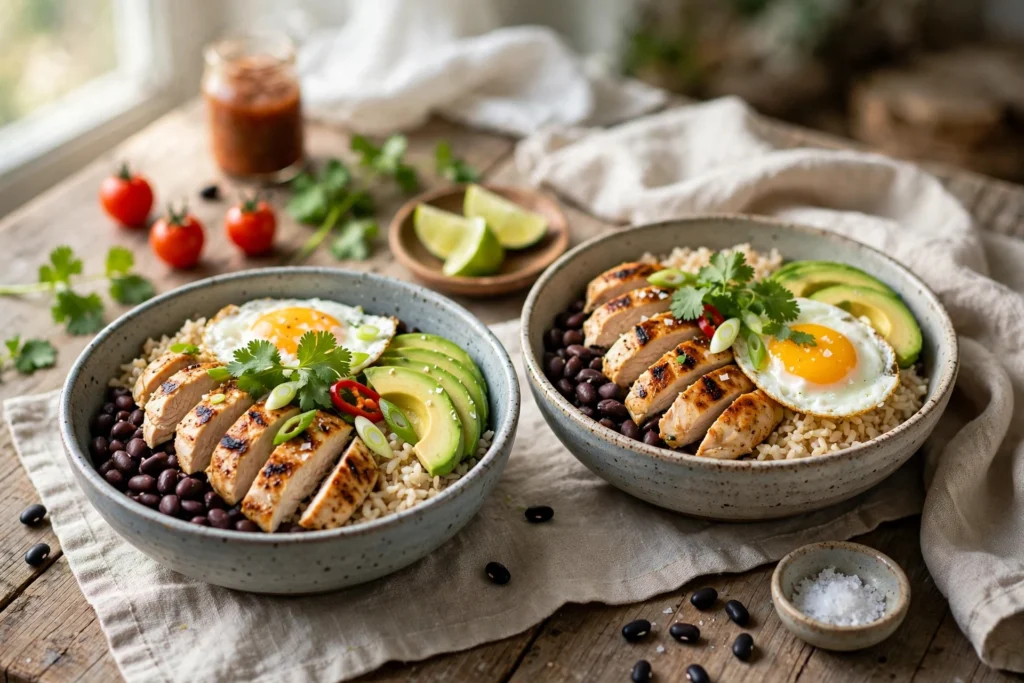
Build a bowl with sliced grilled chicken, brown rice, black beans, a fried or scrambled egg, and avocado. It is the biggest breakfast on this list at about 35 grams of protein, and it works well after a morning workout.
Prep the parts in separate containers and assemble the bowl in the morning, so the rice stays fluffy and the avocado stays fresh. The chicken, rice, and beans hold 3 to 4 days in the fridge. Protein: ~35g per serving.
Tip: Keep the egg in its own small container and add it after reheating. A reheated egg in the bowl goes rubbery fast.
14. Freezer Breakfast Quesadillas

Fill tortillas with scrambled eggs, cheese, and black beans, fold them in half, and toast until golden. Cut each one into triangles and freeze them in bags, two triangles per bag, for a breakfast that reheats in minutes.
Two triangles give you about 27 grams of protein. They are best reheated in the air fryer or a dry skillet, which brings the crispness back, while the microwave leaves them soft. Protein: ~27g per serving.
Tip: Let the quesadillas cool on a rack, not a plate. Trapped steam softens the tortilla before it even reaches the freezer.
Sweet Baked Options
Sweet breakfasts can still be high in protein. Cottage cheese, eggs, and protein powder turn pancakes, waffles, and muffins into real breakfasts instead of sugar with a side of guilt. Bake a batch on Sunday and freeze the extras.
15. Cottage Cheese Protein Pancakes
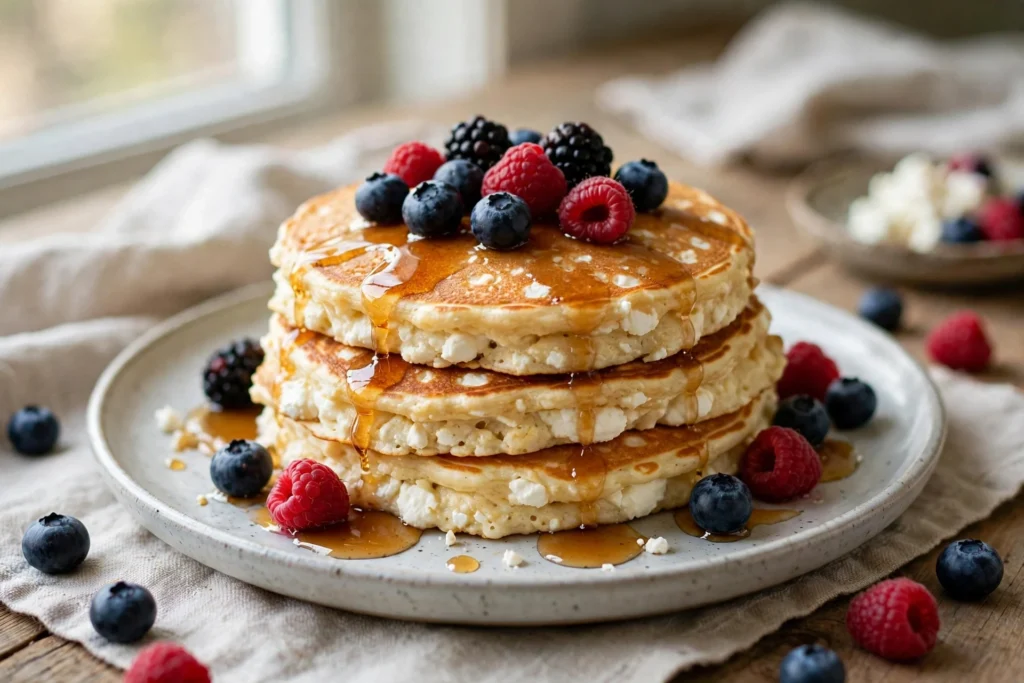
Blend cottage cheese with eggs, oats, and vanilla, then cook small pancakes on a griddle. They come out thick and fluffy, with a mild tang from the cheese that works well with berries and maple syrup.
A serving of three pancakes lands near 30 grams of protein for about 386 calories. They freeze in stacks with parchment between them, and reheat in the toaster in two minutes. Protein: ~30g per serving.
Tip: Keep the heat at medium-low. These pancakes brown fast because of the cheese, and a hot pan burns the outside before the middle sets.
16. Protein Banana Waffles
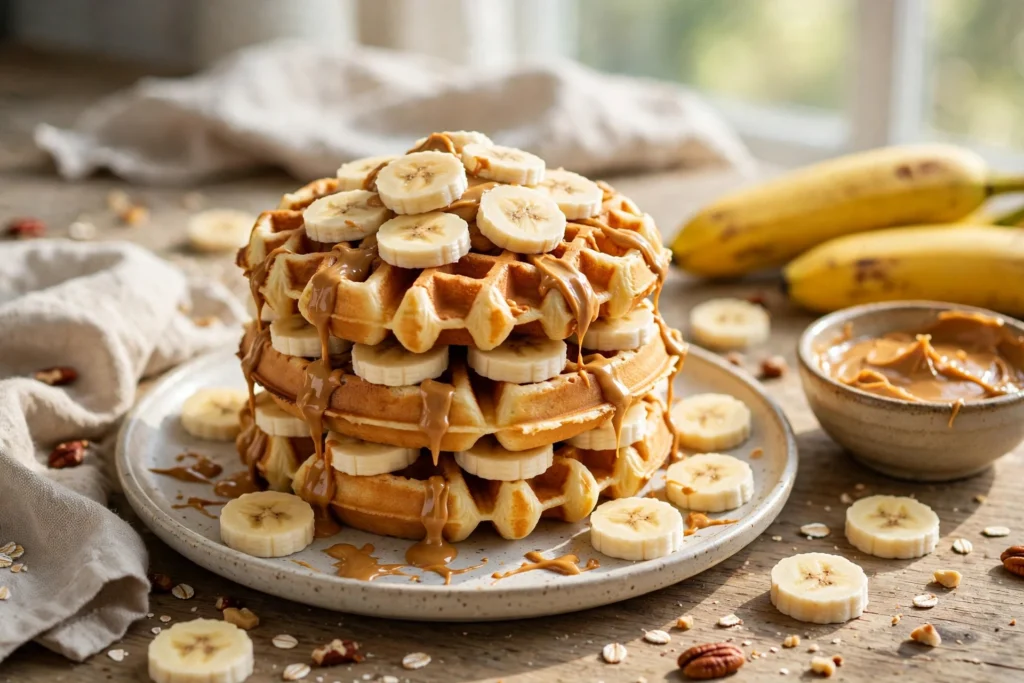
Mash ripe bananas with eggs, a scoop of vanilla protein powder, and a little oat flour, then cook in a waffle iron. The banana keeps them sweet without added sugar, and the waffles freeze beautifully.
Two waffles give you about 26 grams of protein. Make a double batch, freeze them flat in a bag, and pop one in the toaster on busy mornings. Protein: ~26g per serving.
Tip: Freeze waffles flat first, then bag them. Stacked warm waffles freeze into one solid block.
17. Double-Chocolate Protein Muffins
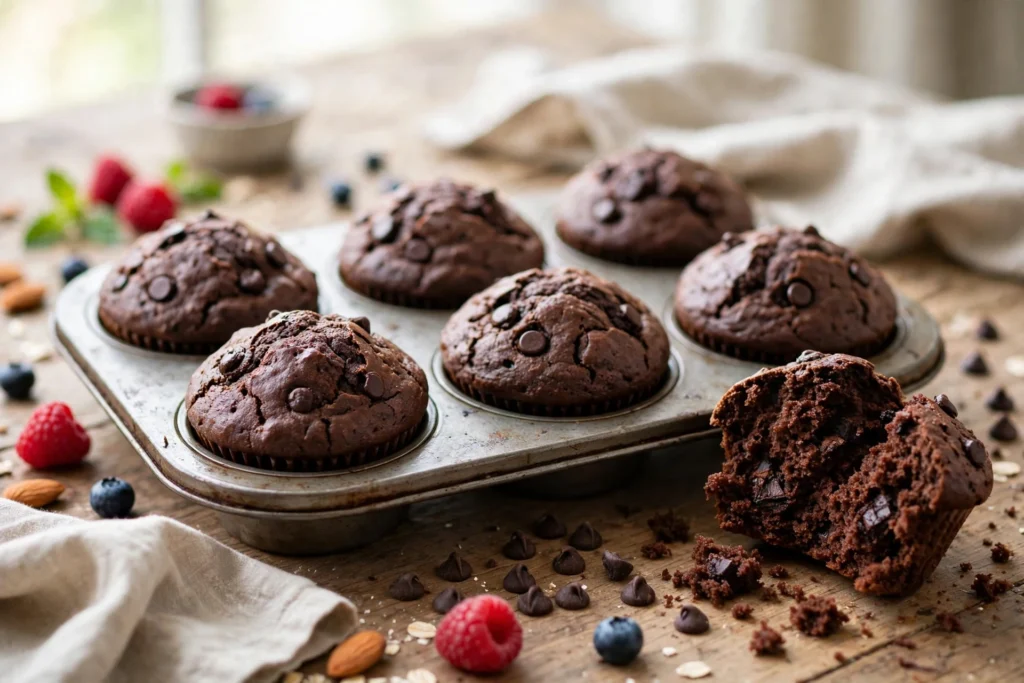
Stir cocoa, chocolate protein powder, eggs, and mashed banana into a muffin batter and bake. They taste like chocolate cake and still clear 26 grams of protein per muffin, which makes them the easiest sweet option to stick with.
One muffin is a full breakfast for lighter mornings, and two make a big one. They keep 4 days in the fridge and 2 to 3 months in the freezer. Protein: ~26g per muffin.
Tip: Pull them out of the oven a minute early. Protein powder dries muffins out fast, and carryover heat finishes the job.
18. Baked Oats with Protein Powder
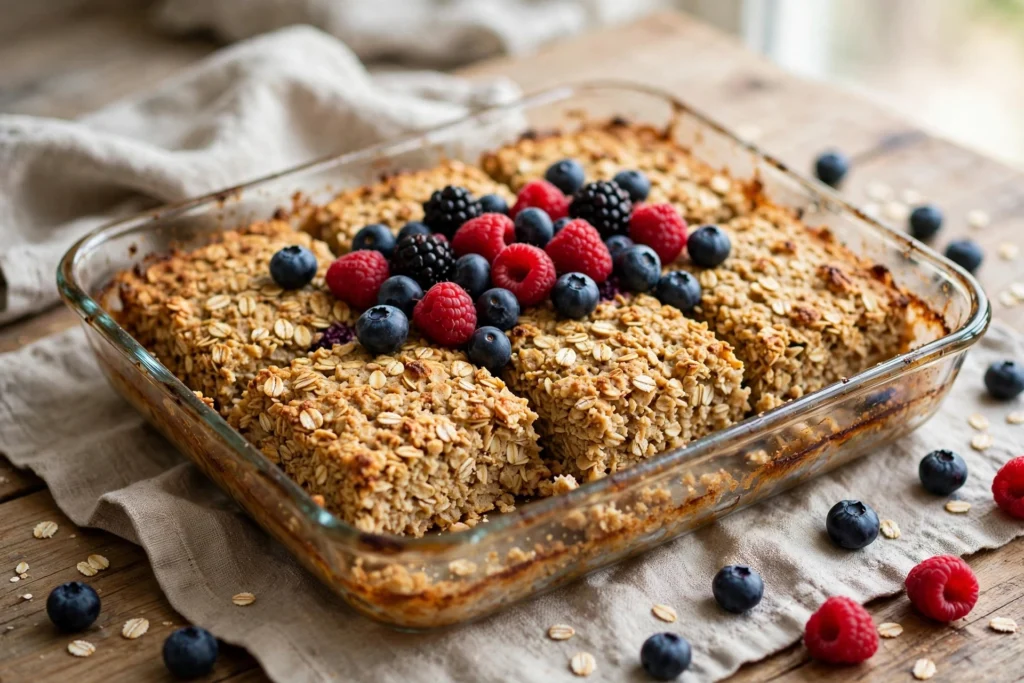
Mix rolled oats with milk, a scoop of protein powder, mashed banana, and berries, then bake in a dish and slice into squares. It is the batch-cook version of oatmeal, and one square is a complete breakfast you can eat warm or cold.
Each square lands near 25 grams of protein, and the dish keeps 4 days in the fridge or up to 3 months in the freezer. Cut it into eight squares on Sunday and you are set for the week. Protein: ~25g per serving.
Tip: Press the mix firmly into the dish before baking. Loose oats crumble when you slice, and a firm press keeps the squares intact.
Smoothies & Freezer Packs
Smoothie packs are the lowest-effort prep on this list. You fill bags with fruit, greens, and protein powder once, and each morning you dump one bag into the blender with milk. Sixty seconds later, breakfast is done.
19. Banana Protein Smoothie + Chia Pudding
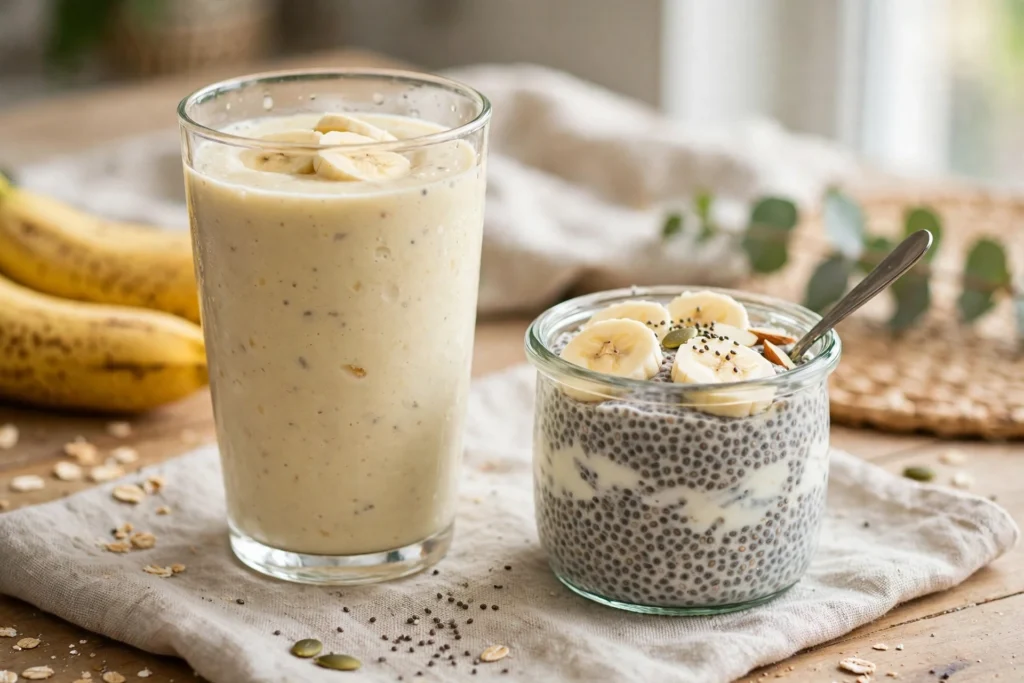
Blend a frozen banana with milk, a scoop of protein powder, and a spoonful of peanut butter, and serve it with a small chia pudding on the side. The smoothie is fast, and the pudding adds fiber and staying power.
Together they land near 28 grams of protein. Blend the smoothie fresh each morning and keep the chia pudding made ahead in the fridge for up to 4 days. Protein: ~28g per serving.
Tip: Freeze your bananas in chunks when they get too ripe. A frozen banana makes the smoothie thick without ice, which waters it down.
20. High-Protein Smoothie Freezer Packs
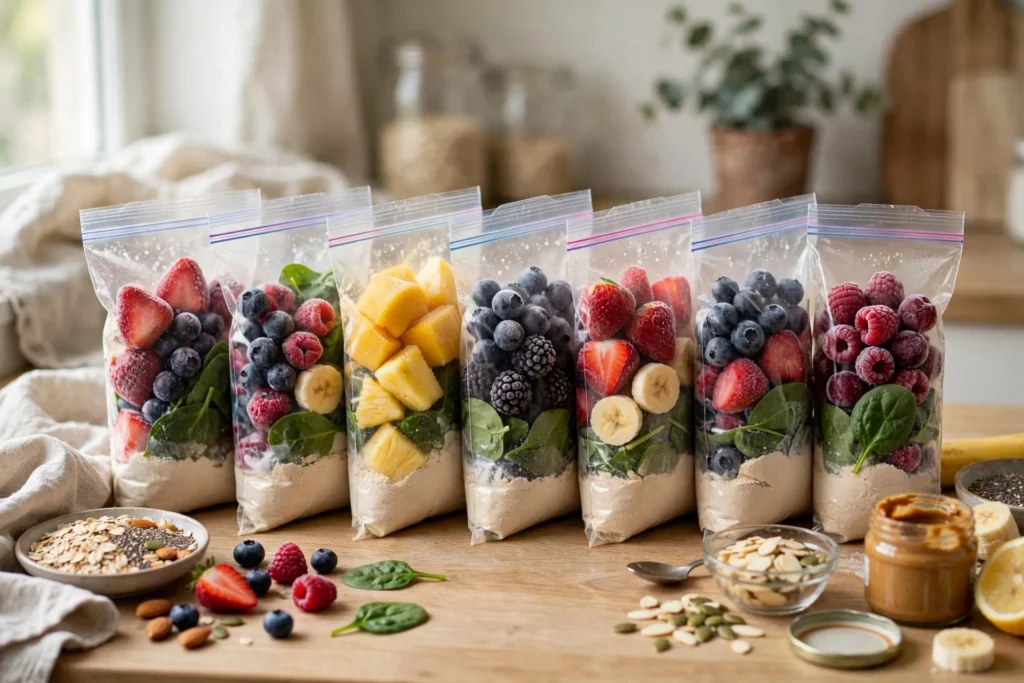
Fill zip bags with frozen berries, spinach, half a banana, and a scoop of protein powder, then freeze them flat. Each morning, empty one bag into the blender, add milk, and blend for 60 seconds.
One pack lands near 25 grams of protein, and the bags keep up to 3 months in the freezer. Make ten at once and you have two weeks of breakfasts that take one minute each. Protein: ~25g per serving.
Tip: Squeeze the air out of each bag before sealing it. Less air means less freezer burn and a fresher-tasting smoothie.
21. Tofu Scramble Freezer Boxes
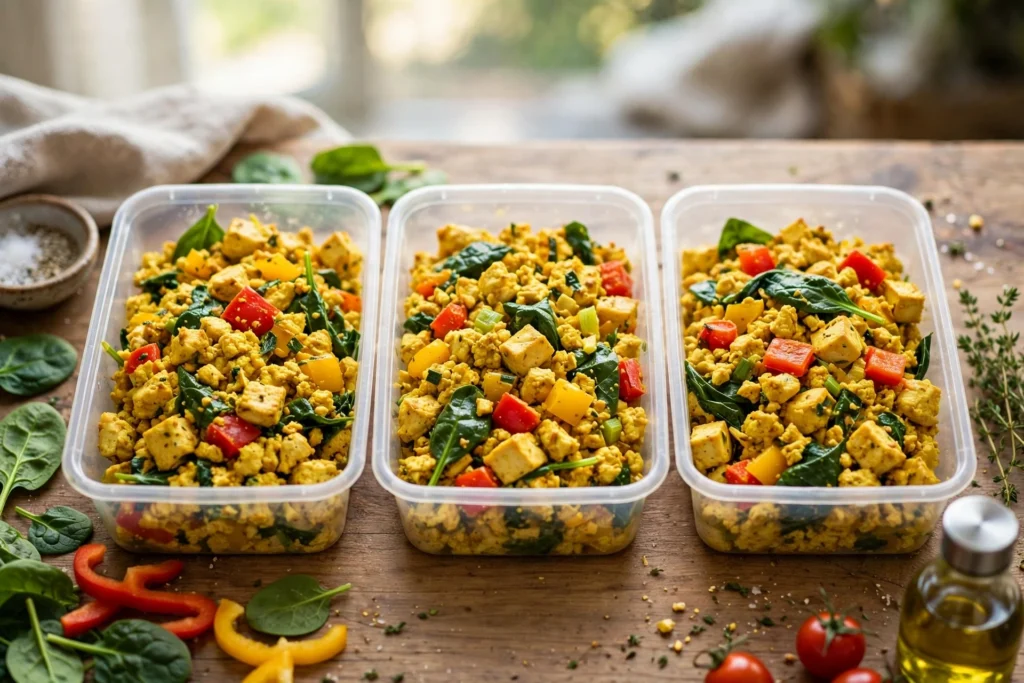
Crumble firm tofu into a hot pan with turmeric, peppers, spinach, and black beans, and cook until golden. Pack it into containers with a side of roasted potatoes, and you have a plant-based breakfast with no eggs at all.
One box carries about 25 grams of protein from the tofu and beans. It holds 3 to 4 days in the fridge and 2 months in the freezer, and reheats in the microwave in 90 seconds. Protein: ~25g per serving.
Tip: Press the tofu for ten minutes before cooking. Dry tofu browns and soaks up seasoning, while wet tofu just steams.
Meal Prep Breakfast Storage & Reheating Guide
Good storage is what makes meal prep breakfast work. Cooked egg dishes last 3 to 4 days in the fridge, and most freeze for 1 to 3 months. Use airtight containers, label every bag with the item and the date, and cool food fully before you wrap it. Storage times below follow the FoodSafety.gov cold food storage charts, and protein values use USDA FoodData Central figures for the main ingredients.
| Item type | Fridge | Freezer | Best reheat method |
|---|---|---|---|
| Egg muffins, bites & squares | 3–4 days | 2–3 months | Microwave 30–45 sec with a damp paper towel, or air fryer 300°F for 3–4 min |
| Overnight oats & chia pudding | 3–5 days | Oats: up to 2 months; pudding: no | Eat cold, or microwave 60 sec |
| Yogurt & cottage cheese jars | 3–4 days | Not recommended | Eat cold |
| Burritos, sandwiches & quesadillas | 3 days | 1–2 months | Microwave 1–2 min, or air fryer 350°F for 10–12 min from frozen |
| Pancakes, waffles, muffins & baked oats | 4 days | 2–3 months | Toaster 2 min, or microwave 30–60 sec |
| Smoothie packs | — | Up to 3 months | Blend straight from frozen with milk, 60 sec |
Two rules cover almost every mistake. First, never wrap warm food. Steam turns into ice in the freezer and soggy bread in the fridge. Second, reheat eggs gently. A microwave at full power for two minutes makes rubber, while 30-second bursts with a damp paper towel on top keep egg muffins soft. If you want more make-ahead ideas beyond breakfast, our 7-day high protein meal prep plan and 100g protein day meals use the same batch-cook system for lunch and dinner.
A 5-Day Rotation That Stops Breakfast Boredom
The fastest way to quit meal prep is eating the same thing five days in a row. Use this rotation instead: two cooked options, one no-cook jar, one freezer item, and one sweet option each week.
| Day | Breakfast | Morning work |
|---|---|---|
| Monday | Turkey Spinach Egg Bake square + fruit | Reheat 45 sec |
| Tuesday | Overnight Protein Oats | Grab from the fridge |
| Wednesday | Black Bean & Egg Breakfast Burrito | Reheat 1–2 min |
| Thursday | Greek Yogurt Protein Parfait | Add granola, eat |
| Friday | Cottage Cheese Protein Pancakes + smoothie pack | Toast pancakes, blend smoothie |
On Sunday, cook the egg bake and the burritos, assemble the oats and parfait jars, and freeze the pancakes. That is one hour of prep for five mornings with no repeats. For more grab-and-go ideas, see our breakfast meal prep ideas and high protein meal prep bowls. If you want a sweet finish to the week, our air fryer recipes also work for reheating egg bites and burritos in minutes.
Meal Prep Breakfast FAQs
How much protein should breakfast have?
Most adults do well with 25 to 30 grams of protein at breakfast. That amount keeps you full until lunch and supports muscle, especially on active mornings. Every idea in this list clears 25 grams per serving.
How long does meal prep breakfast last in the fridge?
Cooked egg dishes last 3 to 4 days in airtight containers. Overnight oats and yogurt jars last 3 to 5 days, and pancakes, waffles, and baked oats last about 4 days. Freeze anything you will not eat within that window.
Can you freeze overnight oats?
Yes. Overnight oats freeze well for up to 2 months in jars or containers. Thaw them overnight in the fridge and eat them cold, or warm them for 60 seconds in the microwave. Yogurt and cottage cheese jars should not be frozen, since the texture turns grainy.
How do I reheat egg muffins without them going rubbery?
Reheat them gently. Use the microwave at half power in 30-second bursts, with a damp paper towel over the top, or use an air fryer at 300°F for 3 to 4 minutes. Both methods keep the eggs soft instead of turning them tough.
What high-protein breakfasts can I make without eggs?
Greek yogurt jars, cottage cheese bowls, and protein oats all clear 25 grams with no eggs. For a hot option, try the tofu scramble freezer boxes, which land near 25 grams per serving from tofu and black beans.
Start with two recipes this Sunday: one cooked option and one no-cook jar. That is enough to cover three mornings, and you can add a freezer batch the next weekend. A protein-rich breakfast that is already waiting in the fridge is the easiest healthy habit you can build, and it takes less time than one drive-thru stop a day.