

18 Authentic Basquaise Chicken Stew for Cozy Nights
Few meals bring the comfort of a slow, hearty stew quite like a warm bowl filled with tender chicken and vibrant vegetables. This basquaise chicken stew is a flavorful French-inspired dish that combines juicy chicken with sweet peppers, tomatoes, onions, and aromatic seasonings for a deeply satisfying dinner.
Whether you’re cooking for a quiet night at home, feeding the family, or looking for something special to serve on a chilly evening, these ideas offer plenty of inspiration. I’ve noticed that dishes built around simple, fresh ingredients often become the meals people remember most because every bite feels warm and homemade.
Keep reading to discover cozy variations, serving inspiration, and delicious ways to make this classic-style chicken stew part of your dinner rotation.
Table of Contents
Peppers And Tomatoes
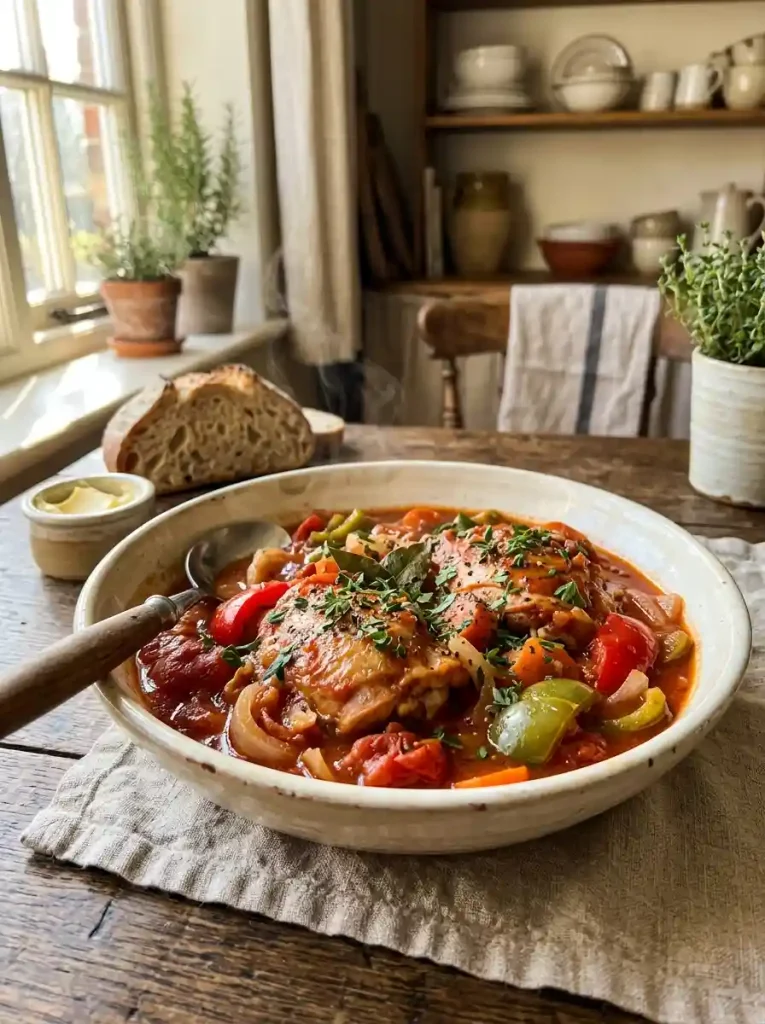
The heart of Basquaise chicken is the generous combination of peppers, tomatoes, onions, and aromatic herbs. Slowly cooking these ingredients creates a naturally rich sauce that clings to every piece of chicken. Use ripe tomatoes when available, or good-quality canned tomatoes for dependable flavor throughout the year.
A colorful pepper mixture also gives the stew its recognizable character. Red peppers bring sweetness, while green peppers add a slightly sharper note. Slice everything into similar sizes so the vegetables soften evenly without disappearing completely into the sauce. The finished pot should look rustic, colorful, and deeply savory.
Golden Chicken Pieces
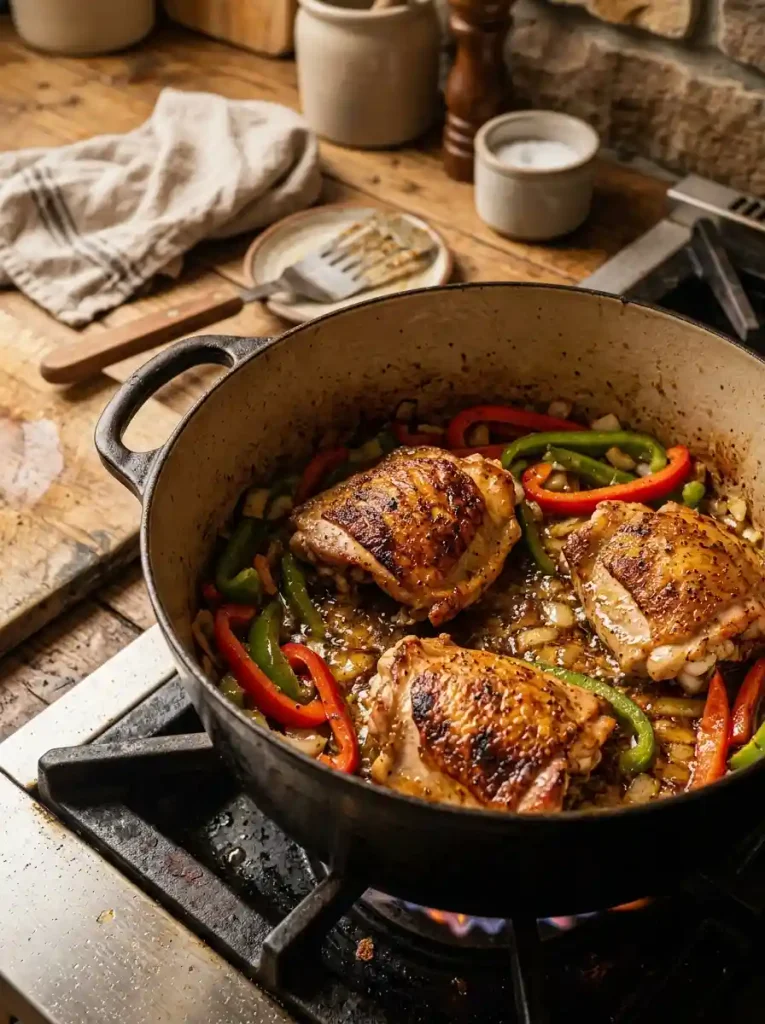
- Dry the chicken: Pat each piece thoroughly before seasoning.
- Season simply: Salt, black pepper, and paprika are enough to start.
- Brown in batches: Give each piece enough room to develop color.
- Avoid constant turning: Let the chicken sear before moving it.
- Reserve the browned pieces: Return them to the pot after the vegetables soften.
Browning builds a deeper foundation for the stew. The chicken does not need to be fully cooked at this stage because it will finish gently in the sauce. Scrape up the browned bits from the bottom when the vegetables release moisture. Those little pieces add valuable flavor to the finished dish.
Slow Simmered Sauce

Quick Tip:
Keep the stew at a gentle simmer rather than allowing it to boil aggressively. A slow bubble gives the chicken time to become tender while allowing the peppers and tomatoes to develop a deeper flavor. Stir occasionally and adjust the heat whenever the sauce starts bubbling too forcefully.
The sauce should gradually become thicker and more concentrated as it cooks. If it looks watery near the beginning, give it time before adding extra thickening ingredients. In my experience, patience produces a more naturally flavorful sauce because the tomatoes reduce while the chicken releases its savory juices into the pot.
You may also like:
Rustic Onion Base
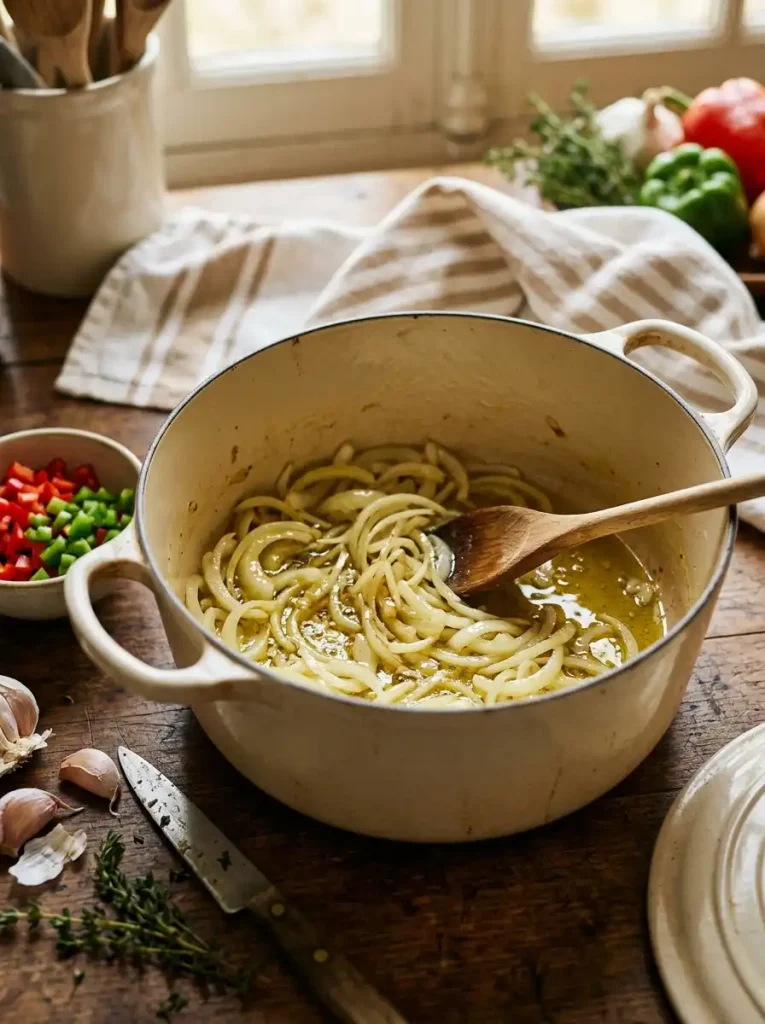
BEFORE: Raw onions can taste sharp and dominate the stew when they are added directly with the tomatoes and chicken.
AFTER: Slowly softened onions become sweet and savory, creating a mellow foundation for the peppers, tomatoes, and herbs. Their texture also blends naturally into the finished sauce.
Cook the onions over moderate heat until they become translucent and lightly golden. Avoid rushing this stage with very high heat because burnt onions can make the entire sauce taste bitter. Once softened, add the peppers and garlic so their flavors can develop without scorching.
Herb Infused Broth

- Choose fresh herbs: Thyme and parsley work naturally with the tomato and pepper base.
- Add bay leaf: Place one or two leaves into the simmering sauce.
- Tie delicate herbs: Use kitchen twine when you want easy removal later.
- Simmer gently: Let the herbs release their aroma gradually.
- Finish with fresh parsley: Add it near the end for a brighter flavor.
Herbs should support the stew rather than overpower the vegetables. Dried herbs work when fresh ones are unavailable, but use them sparingly because their flavor is more concentrated. Remove woody stems and bay leaves before serving so every spoonful contains tender chicken and vegetables rather than tough herb pieces.
One Pot Method

| Comparison | Separate Cooking | One Pot |
| Cleanup | Several pans | One main pot |
| Flavor | Developed separately | Flavors combine naturally |
| Preparation | More steps | Streamlined |
| Best For | Complex meals | Cozy weeknight cooking |
A one-pot method keeps the cooking process practical while allowing every ingredient to contribute to the final sauce. Brown the chicken first, soften the vegetables in the same pot, then return the chicken to finish gently. The browned residue left behind becomes part of the sauce rather than being washed away.
Helpful External Resources
- King Arthur Baking – Amazing baking guides and recipes
- Serious Eats – In-depth cooking techniques and tips
Tender Chicken Thighs

DO:
- Choose bone-in or boneless thighs according to preference.
- Brown the chicken before simmering.
- Keep the sauce at a gentle bubble.
- Check the thickest part before serving.
- Let the chicken rest briefly after cooking.
DON’T:
- Boil the stew aggressively.
- Crowd the pot during browning.
- Cut the chicken repeatedly while it cooks.
- Remove all the sauce before the chicken is tender.
Chicken thighs work particularly well in a slow-simmered stew because they stay moist during longer cooking. Keep the pieces partially submerged in the sauce so they absorb the tomato, pepper, and herb flavors. The final texture should be tender enough to cut easily with a fork without falling apart completely.
Smoky Paprika Seasoning
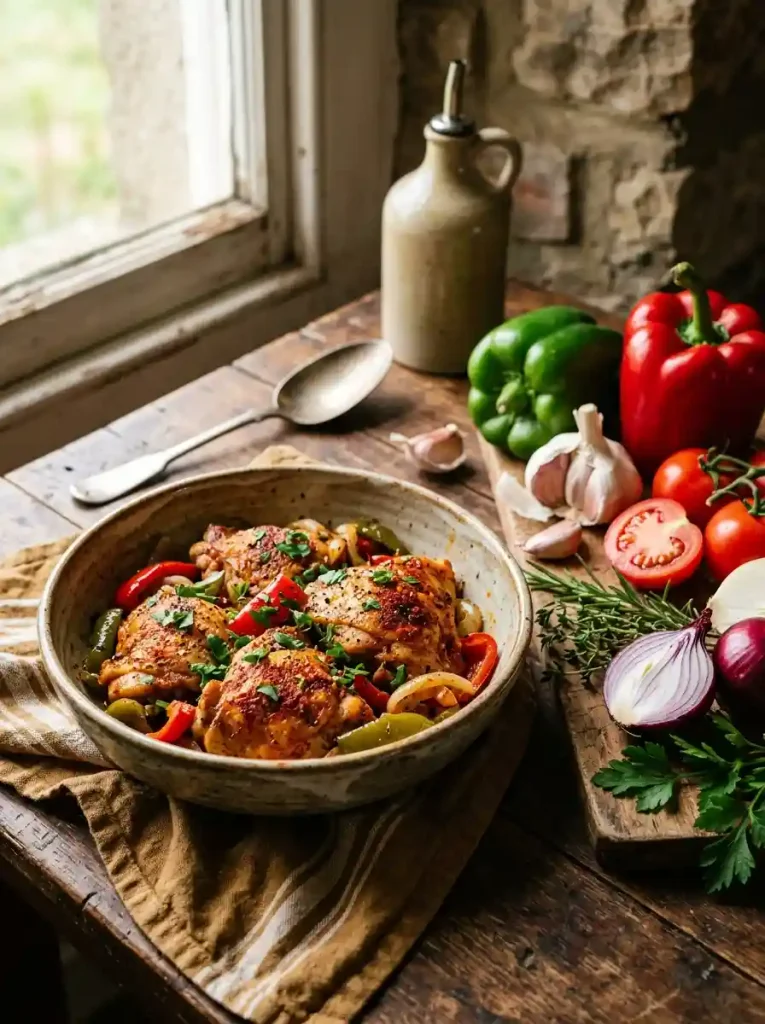
Flavor: Warm and savory | Prep: About 10 minutes
Skill Level: Beginner | Best For: Deepening the sauce
Key Ingredients: Paprika, garlic, black pepper, herbs | Result: Rich color and gentle smokiness
Paprika gives the chicken and sauce a warm red color while adding subtle depth. Use sweet paprika for a mellow flavor or smoked paprika for a stronger smoky note. Add it with the other dry seasonings before the liquid goes into the pot so the spice can bloom briefly in the cooking fat.
Tomato Rich Gravy

A rich tomato base turns simple ingredients into a spoonable sauce that feels substantial. Let the tomatoes simmer uncovered when the mixture needs reducing, but watch the bottom of the pot carefully. Stir occasionally so the sauce thickens evenly without sticking or scorching.
For a smoother texture, crush larger tomato pieces with the back of a wooden spoon during cooking. For a chunkier rustic stew, leave the tomatoes and peppers more intact. Both approaches work well, but the sauce should be thick enough to coat the chicken rather than pooling thinly around it.
Rustic Bread Pairing

BEFORE: A bowl of stew can leave flavorful sauce behind when there is nothing available for soaking it up.
AFTER: Crusty bread provides a simple companion for the rich tomato and pepper sauce. The crisp crust contrasts with the tender crumb and makes the meal feel complete.
Choose a sturdy loaf that can handle a generous spoonful of sauce without immediately falling apart. Slice it just before serving and keep it slightly warm if possible. The bread does not need complicated toppings because the stew already provides plenty of savory flavor.
Garlic Pepper Sauté
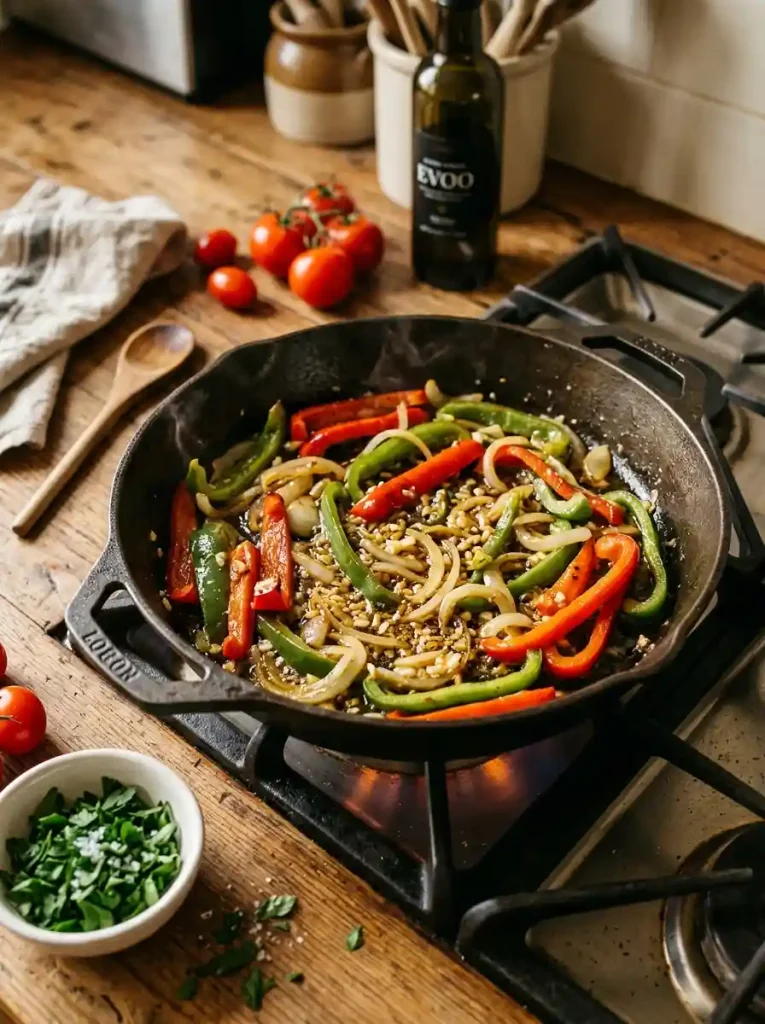
- Slice the vegetables: Keep peppers and onions in similarly sized strips.
- Warm the oil: Use moderate heat to prevent garlic from burning.
- Cook the onions: Let them soften before adding the peppers.
- Add garlic later: Give it only a short cooking time.
- Season lightly: Add salt and pepper before combining with the tomatoes.
A careful sauté creates the aromatic base that makes the stew smell inviting before the tomatoes even arrive. Keep the garlic from becoming dark because burnt garlic can introduce bitterness. Once the peppers begin to soften, add the tomatoes and return the browned chicken to the pot.
Pepper Trio Mix
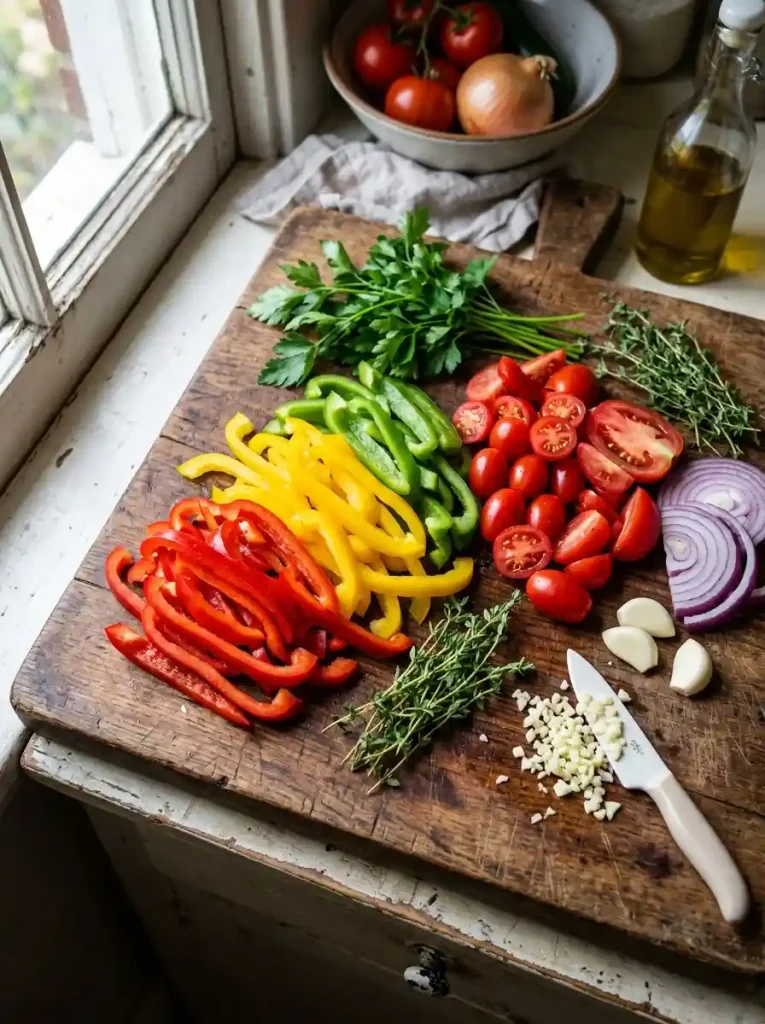
| Pepper | Flavor | Visual Effect |
| Red | Sweet | Deep red color |
| Yellow | Mild and sweet | Bright contrast |
| Green | Slightly sharp | Traditional rustic tone |
| Mixed | Balanced | Colorful finished stew |
Using several pepper colors creates a more vibrant pot while giving the sauce different layers of sweetness and savory flavor. Red and yellow peppers soften into the tomato base beautifully, while green peppers provide a slightly more pronounced vegetable note. Choose firm peppers with smooth skins for the best texture.
Cozy Family Serving

DO:
- Serve the stew directly from a warmed pot or serving bowl.
- Garnish with fresh parsley just before eating.
- Keep bread nearby for the sauce.
- Use deep bowls for generous portions.
DON’T:
- Serve the stew in shallow plates.
- Add delicate herbs too early.
- Let the finished pot sit uncovered for a long period.
- Overcomplicate the table with heavy side dishes.
This is the kind of dinner that works naturally at a shared table. Keep the presentation relaxed and let the colorful stew provide most of the visual appeal. A simple green salad and crusty bread are enough to accompany it without competing with the tomato, pepper, and chicken flavors.
Make Ahead Stew
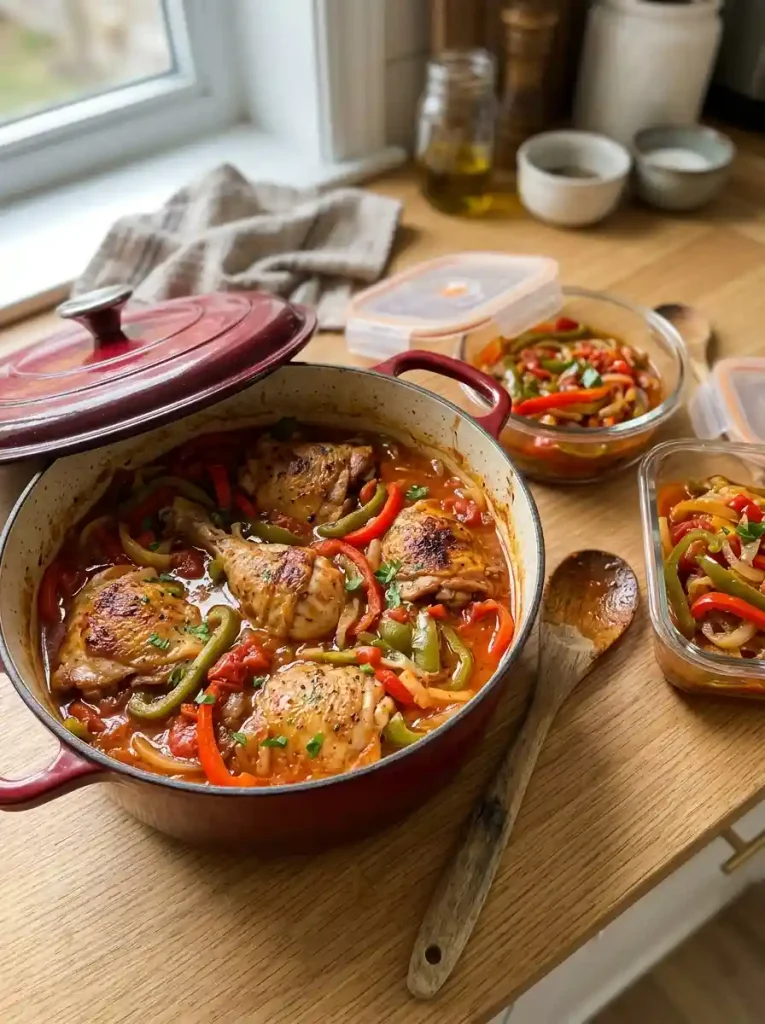
Time: About 30 minutes active preparation | Storage: Refrigerate promptly
Best For: Next-day lunches and dinners | Texture: Often deeper after resting
Skill Level: Beginner | Tip: Reheat gently
A tomato-based chicken stew is convenient for make-ahead meals because the flavors can settle and blend after cooking. Cool it promptly and refrigerate in a covered container. Reheat gently on the stovetop, adding a small splash of water or broth if the sauce has thickened considerably.
Basque Style Presentation
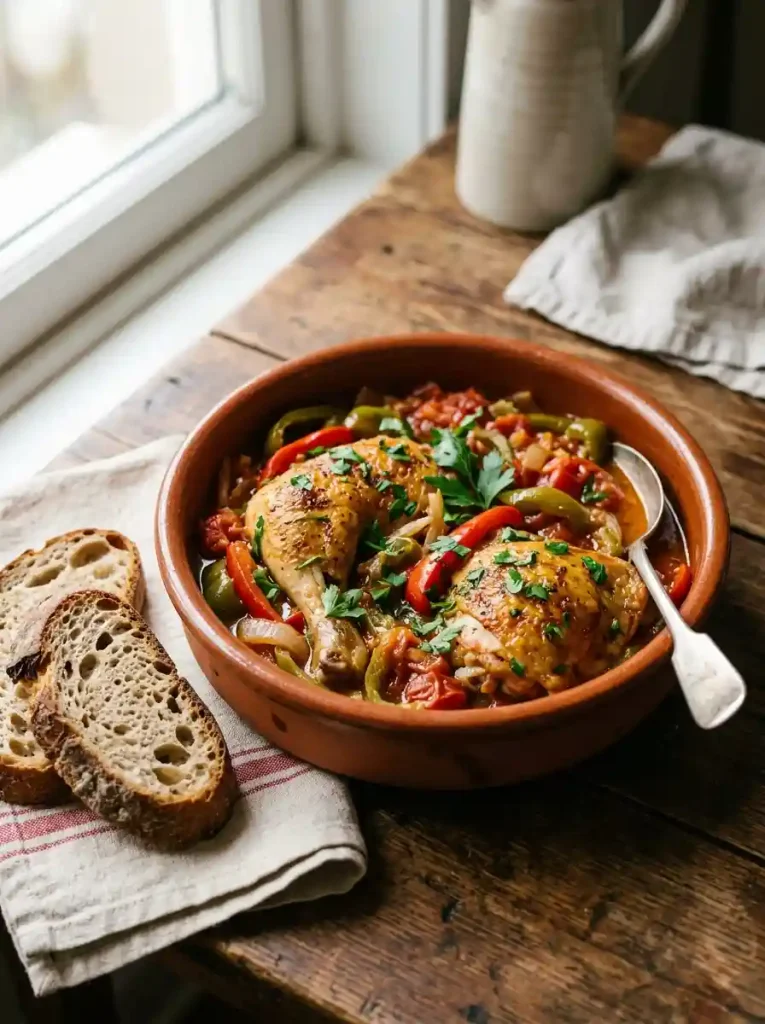
The finished presentation should look generous rather than overly polished. Spoon the chicken into a deep bowl and surround it with plenty of peppers and tomato sauce. Add fresh parsley at the end for color, then serve with rustic bread on the side.
A wide, shallow bowl can make the vegetables more visible, while a deeper bowl keeps the sauce warm for longer. For a family dinner, serve the stew from the cooking pot and let everyone choose a chicken piece and plenty of vegetables.
Leftover Lunch Bowl
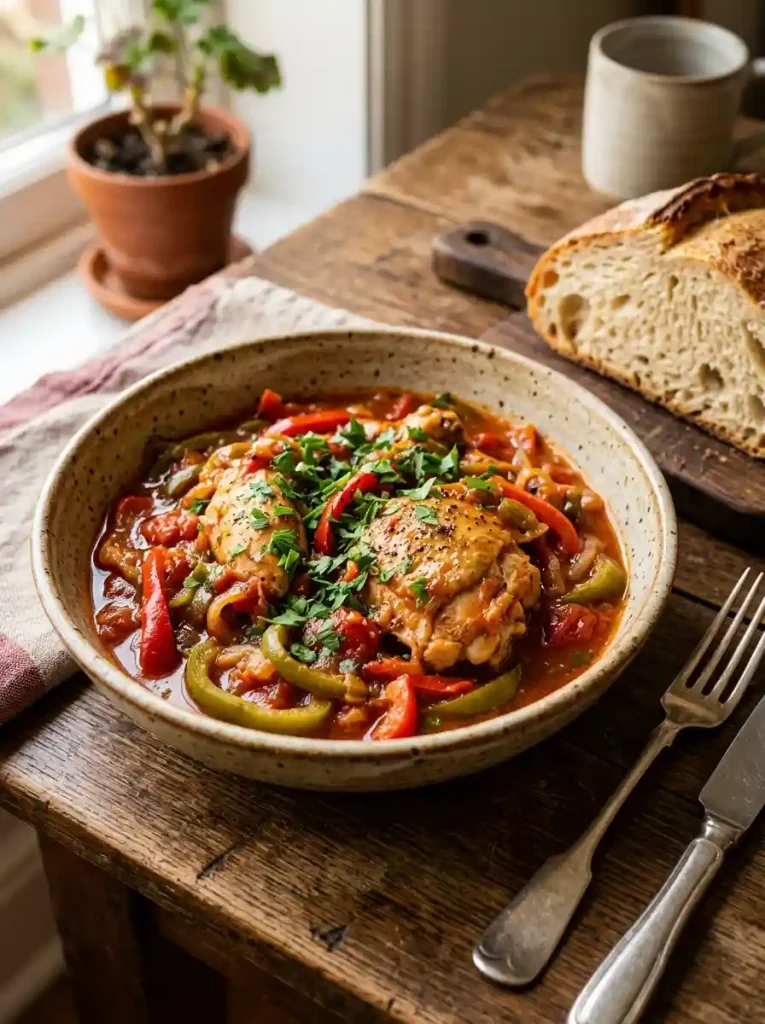
Protein: Chicken | Prep: Minimal when leftovers are ready
Best For: Next-day lunch | Storage: Keep chilled
Reheat: Gently on stovetop or in microwave | Result: Flavorful ready-to-eat meal
Leftover stew can make the following day’s lunch much easier. Store the chicken and sauce together so the meat stays moist, then reheat until thoroughly hot. Add fresh parsley after warming and serve with a simple salad or bread if you want something extra alongside the stew.
Weeknight Stew Routine
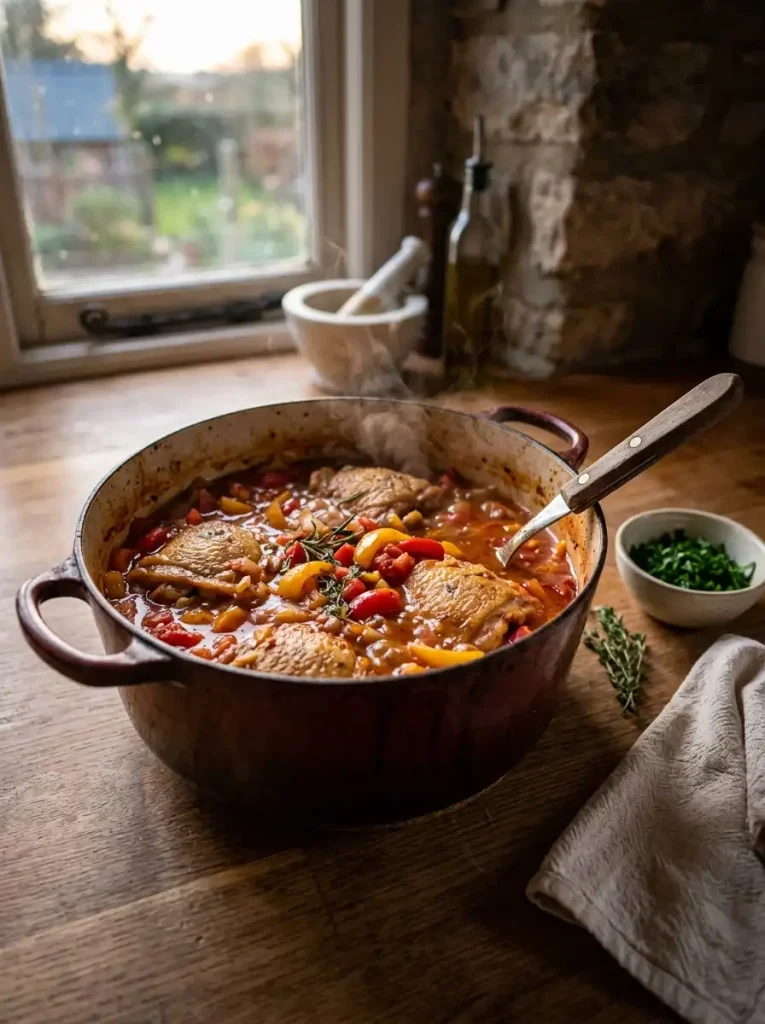
The easiest way to make this stew manageable on a busy evening is to prepare the vegetables before the chicken starts cooking. Slice the peppers and onions, mince the garlic, measure the seasonings, and open the tomatoes first.
Once the ingredients are ready, the cooking follows a simple rhythm: brown the chicken, soften the vegetables, add tomatoes and herbs, then return the chicken for a gentle simmer. That preparation makes a high protein desk lunches work style meal less relevant here, but the stew itself remains a practical make-ahead dinner for busy households.
Classic Basquaise Finish

A final taste before serving brings the whole pot together. Check the seasoning, add a little black pepper or salt if needed, and brighten the sauce with fresh parsley. If the tomatoes taste particularly sharp, a longer gentle simmer can help round out their acidity.
Serve the stew hot with its colorful peppers and generous tomato sauce. The best version is rustic, deeply savory, and comforting without needing complicated ingredients. Keep the garnish simple, let the chicken remain the centerpiece, and serve plenty of sauce for spooning over every bite.
CONCLUSION
A comforting stew has a special way of turning an ordinary dinner into something worth slowing down for. These basquaise chicken stew ideas bring together tender chicken, colorful vegetables, tomatoes, and savory flavors in a meal that feels both rustic and inviting. I’ve found that recipes like this are especially enjoyable when shared around the table with warm bread or a simple side. Save this collection on Pinterest so you can return to it whenever you’re craving a cozy homemade dinner. Try your favorite idea, share it with someone who loves hearty comfort food, and enjoy creating a meal that brings warmth to the whole table.

One Comment